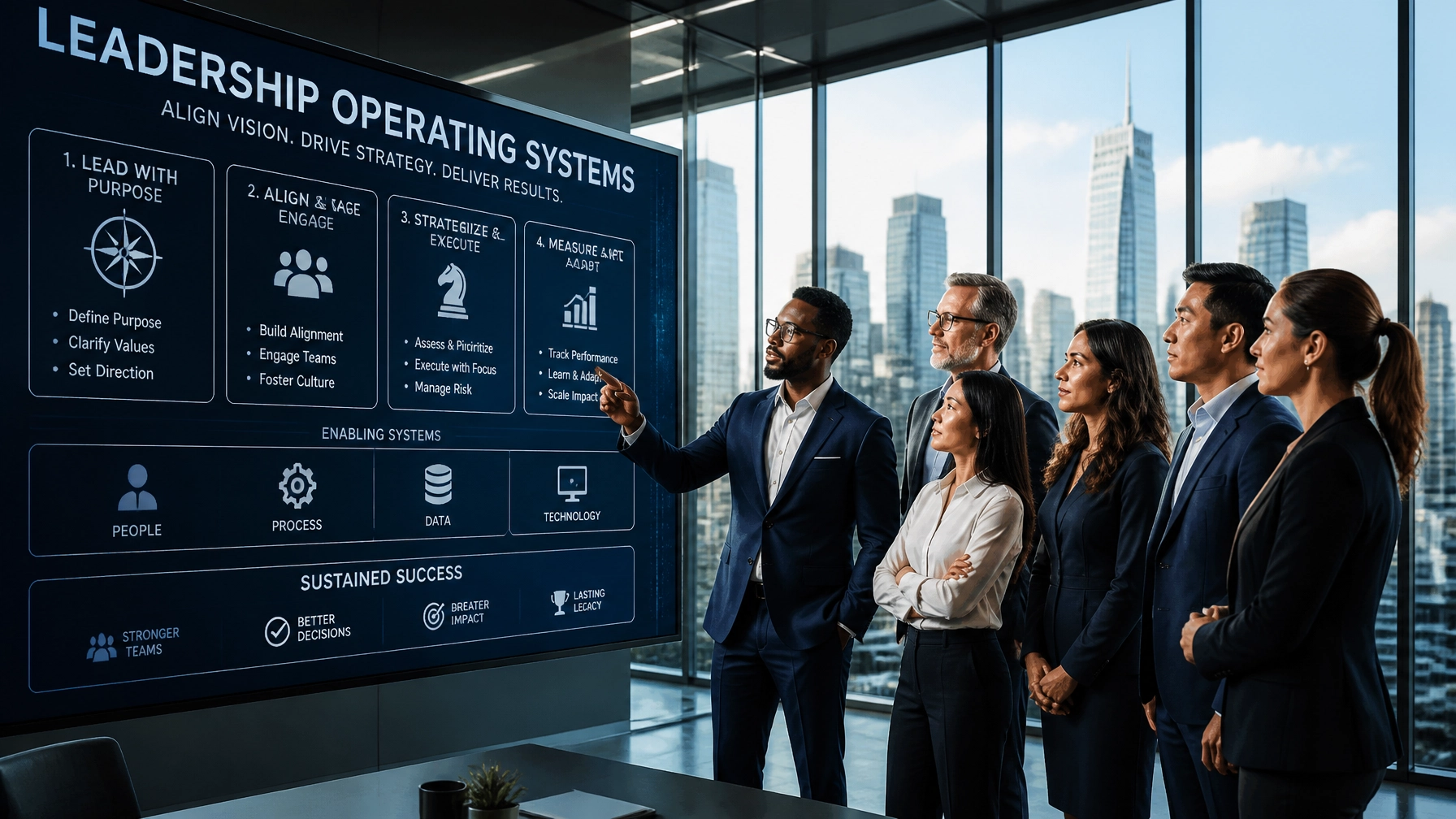
A Leadership Operating System (LOS) is the invisible architecture that dictates how an organization breathes, moves, and scales. It is not a collection of buzzwords or a static handbook gathering dust on a digital shelf: it is a living framework of behaviors, decision rights, and communication protocols. When executed with precision, an LOS creates an environment of high accountability and predictable results. When mismanaged, it becomes a source of friction that erodes trust and stifles growth.
At Legacy Vanguard Scott Group (LVSG), we specialize in hardening these systems through a dual-service model that bridges the gap between top-tier leadership and a robust, auditable staffing engine. We have observed that even the most ambitious organizations often stumble over the same foundational hurdles.
Here are the seven critical mistakes you are making with your Leadership Operating System and how to ignite a transformation that lasts.
1. Fragmented Strategic Alignment (Commander’s Intent)
The most common point of failure in any LOS is the absence of clear Strategic Alignment (Commander’s Intent). In a military context, Commander’s Intent provides a clear picture of what success looks like, allowing subordinates to exercise disciplined initiative even when the original plan falls apart.
In the corporate sector, leaders often fail to translate their high-level vision into a concrete, shared understanding of the end-state. If your team cannot articulate the "why" and the "what" of your current mission without checking a slide deck, you have a fragmented system. This disconnect leads to wasted effort: teams working hard in directions that do not move the needle. You must empower your leaders to lead with confidence by ensuring every action is anchored to a unified strategic purpose.

2. A Broken Operational Rhythm (Rhythm of Battle)
Consistency is the bedrock of discipline. Many organizations suffer from a chaotic Operational Rhythm (Rhythm of Battle): the cadence of meetings, reports, and decision-making cycles that keep the organization synchronized.
A broken rhythm manifests as meetings that have no clear agenda, inconsistent attendance, or a lack of follow-through on action items. To strengthen your LOS, you must establish a rigorous cadence that facilitates the flow of information upward and downward. Without a disciplined operational rhythm, your leadership team remains reactive, constantly putting out fires instead of preventing them. High-impact organizations treat their meeting cadence as a sacred "operating system" component that cannot be compromised.

3. Viewing Executive Coaching for Leaders as a Luxury
Many executives believe they can implement a complex LOS without external perspective. They view executive coaching for leaders as a remedial measure or a "nice-to-have" for underperformers. This is a strategic error.
The most effective leaders utilize personalized 1:1 coaching to identify blind spots in their own behavior and to refine their decision-making processes. An LOS is only as effective as the leaders who operate it. By investing in top-tier executive coaching, you ensure that your leadership behaviors align with the system you are trying to build. This investment results in measurable behavior change: connecting your personal growth directly to the organization’s bottom line.

4. Skipping the Strategic Debrief (After Action Review)
Growth requires a feedback loop. In high-stakes environments, the Strategic Debrief (After Action Review, or AAR) is a non-negotiable tool for continuous improvement. It is a disciplined process of looking at what was supposed to happen, what actually happened, and why.
Too often, business leaders finish a project or a quarter and immediately sprint to the next objective without a formal debrief. This mistake ensures that the same errors are repeated and successes are never fully codified into the system. A robust LOS must include a culture of accountability where every significant action is followed by a strategic debrief to capture lessons learned and refine the operating system.

5. Neglecting Management Coaching and Training
An LOS often fails because it is only embraced at the "Apex" level. If your mid-level managers are not equipped to model and enforce the new ways of working, the system will collapse. Management coaching and training is the bridge that carries the LOS from the boardroom to the front lines.
Your managers are the primary drivers of culture and retention. Without a "custom-tailored" training program that aligns their skills with the company's operating system, they become unintentional bottlenecks. To achieve breakthrough performance, you must empower every level of management with the tools to lead with authority and clarity.
6. Designing Around Personalities, Not Performance
A major pitfall in leadership development is building processes around the specific quirks or preferences of individual leaders rather than the objective needs of the business. When an LOS is personality-dependent, it becomes fragile. If a key leader leaves, the system breaks.
An "operating system" mindset requires you to define roles, decision rights, and responsibilities based on the organizational mission. By standardizing these elements, you create a resilient structure that survives leadership transitions. This approach creates an air of exclusivity and premium service within your own ranks, as everyone understands exactly what is required to excel in their role.
7. Failing to Integrate the Staffing Engine
A Leadership Operating System cannot exist in a vacuum. It must be fueled by a strategic recruiting and staffing engine that brings in "culture-aligned" talent.
Many firms make the mistake of separating their leadership standards from their hiring operations. At LVSG, our dual-service model ensures that your staffing engine is auditable and integrated directly into your leadership framework. If you are hiring people who do not fit the discipline and rigor of your LOS, you are effectively introducing a virus into your operating system. Stabilizing your staffing is the first step toward protecting your service quality and building a lasting legacy.
Elevate Your Leadership Performance
Correcting these mistakes requires more than just a quick fix; it requires a commitment to high standards and a purpose-driven strategy. Whether you are looking to harden your culture or optimize your hiring operations, the time to act is now.
Your legacy is defined by the systems you leave behind. Don't settle for a fragmented approach: demand a Leadership Operating System that delivers measurable results.
Who’s ready to harden their culture and build a legacy? 🔥 🌐 https://www.legacyvanguardscott.com/ 🌐
Leave a Reply