Author: Legacy Vanguard Scott Group

  • Beyond the Action Plan: Why “Being” is the Secret to Impactful Leadership

    Beyond the Action Plan: Why “Being” is the Secret to Impactful Leadership

    In the high-stakes theater of executive leadership, the instinct is almost always to do. We respond to market volatility with more meetings; we counter falling engagement with new initiatives; we combat operational friction with more complex spreadsheets. This obsession with tactical execution: what we at Legacy Vanguard Scott Group call the "Doing" trap: is often the very thing preventing a leader from achieving true breakthrough performance.

    If you are a CEO, a high-growth founder, or a senior executive, you likely already have a robust "Action Plan." But if that plan isn't yielding the measurable behavior change you need in your organization, the problem isn't the plan. The problem is your state of being.

    At Legacy Vanguard Scott Group (LVSG), our veteran-led executive coaching focuses on the "Civilian Translation Layer" of leadership. We take the rigorous discipline of military command and translate it into high-impact corporate strategy. To move from a manager of tasks to a master of legacy, you must shift your focus from the "Action Plan" to your internal "Operating System."

    The Trap of Tactical Execution: Why "Doing" is Not Enough

    Most leadership development programs focus on the Doing: the skills, the habits, and the checklists. While these are necessary, they are insufficient for the Apex level of leadership. When you focus solely on tactical execution, you are merely managing the Operational Rhythm (Rhythm of Battle).

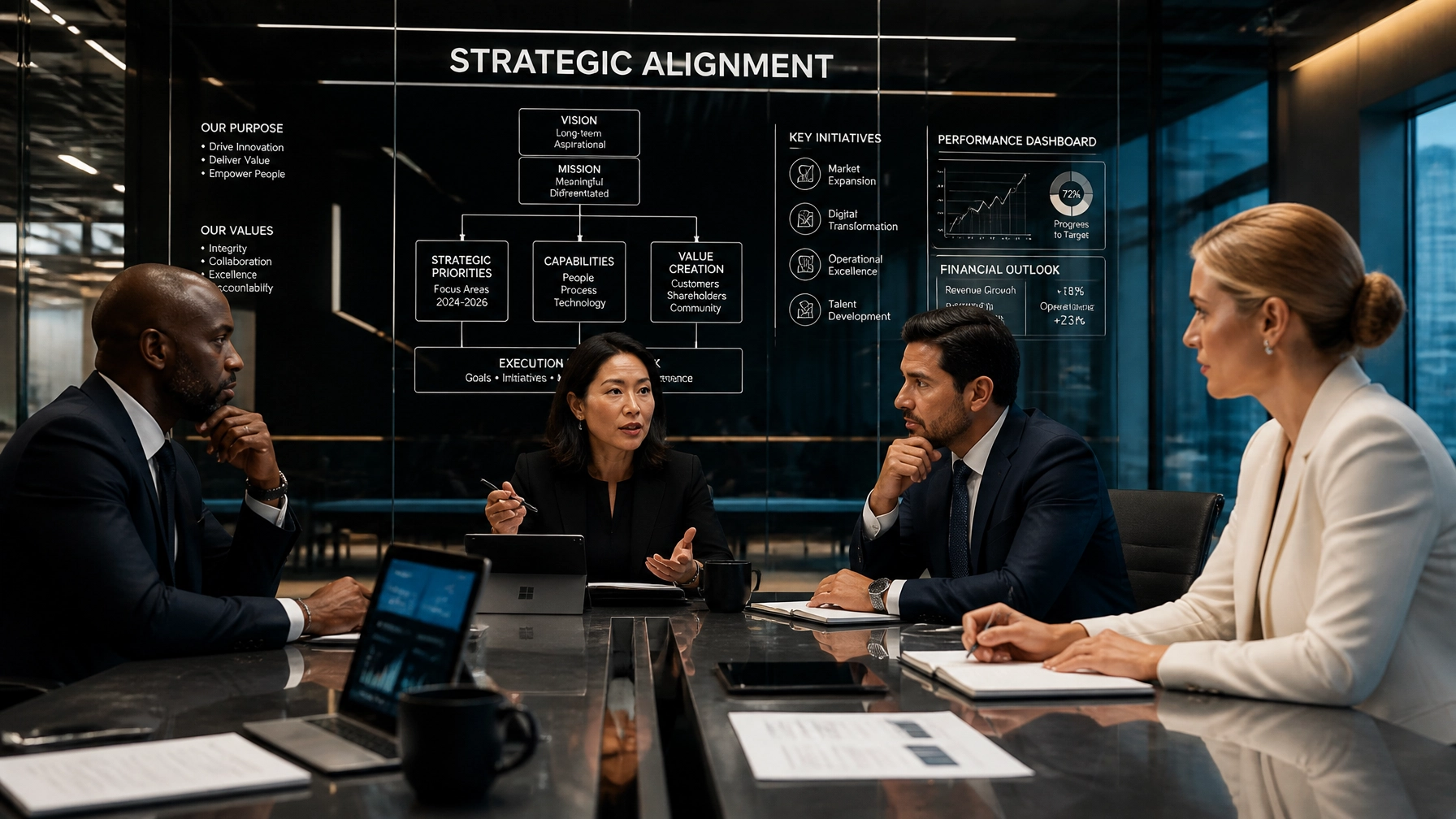
    True leadership requires Strategic Alignment (Commander’s Intent). In the military, a commander doesn't give a step-by-step checklist; they provide the Intent: the "what" and the "why": so that the team can adapt the "how" in real-time.

    When a leader operates only in the "Doing" mode, they become a bottleneck. When a leader shifts to the "Being" mode: embodying presence, character, and intentionality: they become a multiplier. They ignite potential across the entire organization: driving change through influence rather than authority.

    A diverse group of leaders conducting a Strategic Debrief (After Action Review) in a focused boardroom environment

    The "Being" Operating System: Identity and Character

    Your "Being" is the quality of presence you bring to every motion. It is the silent signal you send in a board meeting, the calm you project during a crisis, and the standard of excellence you hold without saying a word.

    To elevate your leadership, you must audit your internal Operating System. This involves three core pillars:

    1. Presence (Executive Stature)

    Executive presence is not about charisma; it is about Strategic Alignment between your internal state and your outward impact. Are you grounded and composed, or are you frantic and reactive? A leader’s anxiety is contagious: but so is their clarity.

    2. Character (The Discipline of Standards)

    In the veteran world, we understand that trust is the currency of high-performance teams. Character is the bedrock of that trust. It is the commitment to "harden the culture" by modeling the very behaviors you expect from your direct reports. If you want a culture of accountability, you must be the embodiment of accountability in every Strategic Debrief (After Action Review).

    3. Intentionality (The "Why" Behind the "What")

    Intentionality is the bridge between who you are and what you do. It is the conscious choice to show up with a specific purpose. Before every interaction in your Operational Rhythm (Rhythm of Battle), ask yourself: Who do I need to be in this room to achieve our Strategic Alignment?

    Elevate vs. Apex: Moving Toward Transformational Leadership

    At LVSG, we structure our advisory and coaching through a tiered approach designed to meet leaders where they are and propel them toward where they need to be.

    • Elevate: This modular service focuses on stabilizing the foundation. We help leaders master the mechanics of leadership: tightening the Meeting Cadence (Battle Rhythm), improving decision rights, and ensuring that the "Doing" is efficient and auditable.
    • Apex: This is where we move into the realm of "Being." This custom-tailored, personalized 1:1 coaching is for the leader ready to achieve breakthrough performance. We dive deep into identity, values, and the "multiplier" mindset, transforming how you show up as a leader to ensure a lasting legacy.

    Abstract representation of Apex leadership, symbolizing the multiplier effect and transformational impact

    Hardening the Culture: Applying the Strategic Debrief

    One of the most powerful tools for shifting from "Doing" to "Being" is the Strategic Debrief (After Action Review or AAR). Most corporate "post-mortems" focus on what went wrong and who is to blame. A mission-driven Strategic Debrief focuses on the gap between the intent and the outcome.

    When a leader facilitates a Strategic Debrief with a state of "Being" characterized by curiosity and discipline, it transforms the organizational culture. It moves the team from a defensive, problem-solving posture to a proactive, potential-seeking mindset. It empowers your managers to take ownership of their results: strengthening the organization’s resilience and reducing the cost of lost productivity.

    Mastering the Operational Rhythm

    Discipline is not about restriction; it is about the freedom that comes from order. To lead with confidence, you must establish a clear Operational Rhythm (Rhythm of Battle). This is the structured sequence of meetings, reports, and communication that keeps the organization moving toward its goals.

    However, the rhythm is only as effective as the leader directing it. If you bring a "Being" of distraction or indecision to your Meeting Cadence, no amount of scheduling will save your productivity. By cultivating a presence of focus and high standards, you empower your team to operate at their own Apex level.

    Sleek digital command center dashboard representing the precision of a well-defined Operational Rhythm

    The Path to Breakthrough Performance

    Leadership is a journey of constant refinement. The transition from "Doing" to "Being" is the most challenging shift an executive can make: but it is also the most rewarding. It is the difference between building a company and building a legacy.

    As a veteran-owned firm, Legacy Vanguard Scott Group is committed to helping you navigate this transition. We provide the dual-service model of leadership coaching and strategic organizational advisory that healthcare, public-sector, and growth-stage employers need to thrive in complex environments.

    Stop focusing solely on the next action item. Start focusing on the leader you are becoming. When you change your being, the doing becomes effortless, impactful, and transformative.

    Empowered Black female executive walking with purpose, embodying the mastery of presence and leadership

    Who’s ready to harden their culture and build a legacy? 🔥 🌐 https://www.legacyvanguardscott.com/ 🌐

  • The Complexity Gap: Why Traditional Management Fails Where Executive Coaching Wins

    The Complexity Gap: Why Traditional Management Fails Where Executive Coaching Wins

    In the modern theater of business, complexity is not a variable: it is the environment. For executive leaders in healthcare, the public sector, and growth-stage firms, the challenge is no longer about managing simple workflows or meeting static KPIs. It is about navigating a "Complexity Gap": the widening chasm between the increasing intricacy of global markets and the internal capacity of leaders to handle that volatility.

    At Legacy Vanguard Scott Group, we observe that organizations often attempt to close this gap by doubling down on traditional management. They tighten controls, add more layers of reporting, and focus on tactical problem-solving. Yet, these methods often fail because they are designed for a linear world that no longer exists. To truly bridge the gap, organizations must pivot from traditional management to transformational executive coaching.

    The Trap of Traditional Management: Tactical vs. Transformational

    Traditional management is rooted in the "Commander’s Intent" (Strategic Alignment) of a bygone era: one where goals were fixed and the path to achieving them was predictable. In this framework, the manager’s role is primarily tactical: identifying a problem and applying a known solution.

    While this is effective for routine operations, it falters when faced with high-stakes ambiguity. Traditional management focuses on the "what": the specific tasks, the immediate fires, and the monthly quotas. It prioritizes efficiency over effectiveness, often at the expense of long-term vision.

    Executive coaching, however, focuses on the "who." It is a potential-seeking discipline that shifts the leader’s focus from individual problem-solving to system-wide transformation. Instead of simply managing a team, an executive must learn to lead through influence, presence, and strategic foresight. This is the shift from being a "doer" to becoming a "multiplier" of talent and results.

    An executive and a coach in a focused strategic conversation.

    Navigating the "Rhythm of Battle": Establishing an Operational Rhythm

    In military operations, the "Rhythm of Battle" (Operational Rhythm) dictates the flow of information and the speed of decision-making. In a corporate setting, this is your organization’s pulse: the meeting cadences, the reporting cycles, and the decision rights that keep the engine running.

    When the complexity gap widens, this rhythm often becomes chaotic. Leaders find themselves trapped in perpetual "firefighting," losing sight of the strategic horizon. Traditional management attempts to fix this by adding more meetings. Executive coaching fixes this by sharpening the leader's ability to prioritize and delegate.

    By establishing clear "Decision Rights" (Delegated Authority), a leader can empower their team to operate independently. This frees the executive to focus on high-level strategy and organizational health. This is not just a shift in schedule; it is a shift in mindset. It requires the discipline to step back from the tactical and lean into the transformational.

    Systems Thinking: The Organizational Operating System

    To manage complexity, one must view the organization not as a collection of silos, but as a single, integrated "Operating System" (Business Management Framework). Traditional management tends to fix isolated parts: improving one department’s efficiency while inadvertently slowing down another.

    Systems thinking allows a leader to see the interdependencies. It allows them to understand how a shift in executive behavior in the boardroom can ignite performance changes on the frontline. At Legacy Vanguard Scott Group, we believe that a leader’s primary responsibility is to maintain and upgrade this operating system.

    Abstract graphic representing a sophisticated organizational operating system.

    Executive coaching provides the tools to conduct a "Strategic Debrief" (After Action Review – AAR) on a systems level. Instead of asking "What went wrong with this project?", the systems-oriented leader asks, "What in our current operating system allowed this failure to occur, and how do we harden our culture to prevent it?" This level of inquiry is what separates "Level 5" leaders from standard managers.

    Igniting Momentum: The LVSG Approach to Executive Development

    Legacy Vanguard Scott Group provides a tiered, modular approach to executive development that is designed to meet leaders where they are and propel them to where they need to be. We don't believe in "one-size-fits-all" solutions. Our coaching is custom-tailored to the specific challenges of growth-stage employers and organizations facing persistent leadership gaps.

    • Elevate: This tier focuses on foundational leadership maturity. We work with mid-to-senior level executives to refine their communication, sharpen their decision-making, and build the resilience needed to lead through change.
    • Apex: This is our premium, high-impact consulting service for C-suite executives. It focuses on strategic vision, succession planning, and the cultivation of a legacy-driven organizational culture.

    Through these programs, we empower leaders to move beyond the tactical and achieve breakthrough performance. We help them define their "Commander’s Intent" (Strategic Alignment) with such clarity that the entire organization can move in unison, even in the absence of direct supervision.

    Measuring What Matters: Behavior as an Audit Point

    The hallmark of a disciplined organization is accountability. In traditional management, accountability is often punitive and reactive. In a coaching-led culture, accountability is a tool for growth. We use a structured, auditable approach to leadership development: treating behavior change with the same rigor as financial performance.

    By establishing measurable benchmarks for leader behavior, we ensure that the coaching process leads to tangible outcomes. This "Operating System" mindset ensures that every coaching session, every strategic debrief, and every change in meeting cadence is directed toward a single goal: protecting service quality and reducing the costs of lost productivity.

    A diverse team of empowered professionals walking confidently in a corporate setting.

    Conclusion: Lead with Confidence, Build Your Legacy

    The complexity gap is not going away. As industries continue to evolve at a breakneck pace, the demand for high-standard, resilient leadership will only grow. Traditional management is a relic of a simpler time; executive coaching is the tool for the future.

    By investing in the internal capacity of your leadership team, you are not just solving today’s problems: you are building a fortress that can withstand tomorrow’s challenges. It is time to move past the tactical and start leading with the authority and mission-driven focus that your organization deserves.

    Who’s ready to harden their culture and build a legacy? 🔥 🌐 https://www.legacyvanguardscott.com/ 🌐


  • Beyond the Checklist: Why Doing Things Isn’t the Same as Getting Results

    Beyond the Checklist: Why Doing Things Isn’t the Same as Getting Results

    In the high-stakes environment of executive leadership, motion is frequently mistaken for progress. Organizations across the healthcare and public sectors often fall into a dangerous trap: they celebrate activity while the needle on true performance remains static. This phenomenon: the "Activity Trap": creates a veneer of productivity that masks systemic stagnation.

    At Legacy Vanguard Scott Group, we see this cycle repeat in growth-stage employers and veteran-led firms alike. Leaders track metrics that are numerically accurate but strategically hollow. They count meetings attended, reports filed, and deadlines met, yet find their organizations still plagued by high turnover and supervision challenges.

    To break this cycle, an organization must transition from a culture of "doing" to a culture of "achieving." This requires a fundamental redesign of your leadership operating system: moving beyond the checklist to focus on measurable behavior change and long-term legacy.

    The Mirage of the Checklist: Why Busywork Looks Like Progress

    Digital dashboard vs real-world coaching and behavioral change

    Busywork is the enemy of excellence. It is easy to measure individual tasks; any junior analyst can produce a spreadsheet showing 100% attendance at a management coaching and training seminar. However, these figures only prove that your personnel were physically present in a room. They do not prove that your leadership development consulting has moved the needle on service quality or operational efficiency.

    The illusion of success occurs when a checklist is completed, but the underlying culture remains unchanged. We see this often in "strategic recruiting": an operational rhythm (Rhythm of Battle) where the focus is solely on filling vacancies. If your recruiting engine is placing bodies into seats without aligning those individuals with your culture, you are simply completing a task while inviting a future crisis.

    Real progress is not found in the volume of work produced, but in the transformation of how the organization operates. When employees attend a training session and immediately revert to legacy habits, the initiative has failed: regardless of what the "completion report" says. Success is only realized when new tools are adopted, decision rights are clarified, and behavior is permanently altered.

    Moving to the Point of Action: Gaining Situational Awareness

    Leader observing workflow on the front line

    Digital dashboards and executive summaries provide data, but they lack the vital context required for high-level decision-making. To truly understand why an organization is stalling, leaders must move to the point of action: the operational reality (Point of Action) where the work actually happens.

    True situational awareness is not gained from behind a desk. It is gained by standing where the friction is highest. When executive coaching for leaders focuses solely on theory, it misses the tactical bottlenecks that only become visible through direct observation. By engaging with the front line, leaders can identify resource gaps and supervision failures that spreadsheets conveniently ignore.

    This level of presence allows for a more accurate "Strategic Alignment" (Commander's Intent). When a leader understands the ground-level challenges, they can communicate objectives with a clarity that ensures every team member knows not just what to do, but why they are doing it. This hardens the organizational culture against the friction of daily operations and ensures that high standards are maintained even in the leader's absence.

    The Strategic Debrief: Measuring Behavior, Not Tasks

    Leaders engaged in a deep strategic debrief

    To shift from activity to results, you must change what you reward. If your organization rewards the "check-the-box" mentality, you will breed a culture of compliance rather than one of commitment. High-impact organizations utilize a "Strategic Debrief" (After Action Review – AAR) to scrutinize outcomes rather than just activities.

    A Strategic Debrief should answer three critical questions:

    1. What was the intended outcome? (The Strategic Alignment)
    2. What actually happened? (The Raw Truth)
    3. How will our behavior change tomorrow to bridge the gap? (The Transformation)

    This discipline forces accountability. It moves the conversation away from "we held five meetings" to "we improved decision-making speed by 20%." When you measure behavior, you are looking for evidence that your team is acting differently because of your leadership. Are they utilizing the new "Leadership OS"? Are they making better decisions under pressure? Are they protecting the service quality that defines your Legacy Vanguard Scott Group identity?

    Assessing Real-Time Morale: The Human Factor in Results

    Data-driven cultures often make the mistake of relying on digital surveys to gauge employee well-being. These surveys are lagging indicators; by the time the results are tabulated, the talent you were trying to save has likely already updated their resume.

    Effective leadership development consulting emphasizes the importance of face-to-face interaction to assess real-time morale. Nuances in team energy, eye contact, and the level of candid feedback provided during a session are the true indicators of organizational health.

    When leaders prioritize these human-centric interactions, they demonstrate a commitment to their people that goes beyond output. This builds trust: the bedrock of any high-performing team. A team that trusts its leadership is a team that will strive for breakthrough performance, even when the checklist is long and the mission is difficult.

    Building a Legacy of Breakthrough Performance

    Mentor and protege walking through a corporate plaza

    The transition from "Doing Things" to "Getting Results" is not a quick fix; it is a fundamental shift in your organization’s operating system. It requires the discipline to ignore the noise of busywork and the courage to demand measurable behavior change.

    Legacy is not built on the number of tasks you complete. It is built on the lasting impact you have on your people and the organizations you lead. By hardening your culture and aligning your operational rhythm with strategic outcomes, you ensure that your organization doesn't just survive: it thrives.

    Are you ready to move beyond the checklist and start leading for results? Our team at Legacy Vanguard Scott Group specializes in custom-tailored solutions that bridge the gap between tactical activity and executive excellence. Whether you are looking to stabilize your staffing engine or elevate your leadership team, we provide the disciplined framework necessary to achieve top-tier results.

    Lead with confidence. Strengthen your organization. Build your legacy.

    Who’s ready to harden their culture and build a legacy? 🔥 🌐 https://www.legacyvanguardscott.com/ 🌐


  • Why AI Won’t Fix a Broken Culture (And What Your Leadership Operating System Needs Instead)

    In the current corporate landscape, artificial intelligence is often marketed as the ultimate "magic pill": a tool capable of streamlining operations, eliminating bias, and skyrocketing productivity overnight. Organizations facing persistent vacancies and supervision challenges are rushing to integrate AI, hoping it will bridge the gap left by missing personnel or inexperienced leadership.

    However, here is the hard truth: AI is a Force Multiplier (Strategic Lever). If your organizational culture is healthy and your processes are disciplined, AI will accelerate your success. But if your culture is fractured, your accountability is low, and your decision-making is opaque, AI will only serve to industrialize dysfunction.

    At Legacy Vanguard Scott Group (LVSG), we’ve seen that no amount of technology can compensate for a lack of foundational discipline. To truly ignite growth and protect your service quality, you don't need more algorithms: you need a robust Leadership Operating System (LOS).

    AI Inherits Your Culture’s DNA

    Technology does not operate in a vacuum. It operates within the constraints of your existing human systems. When a firm attempts to "plug in" AI to solve deep-rooted culture issues, the result is often a faster, more expensive version of the same problems.

    If your leadership lacks Commander’s Intent (Strategic Alignment), AI-driven tools will produce outputs that are technically correct but strategically irrelevant. If your team operates without clear Standard Operating Procedures (Best Practice Guidelines), AI becomes a source of confusion rather than clarity.

    Why AI Fails to Fix the Human Element:

    • Trust cannot be automated: AI cannot build psychological safety. In fact, in a low-trust culture, employees often hide their AI use, leading to "shadow systems" that erode transparency.
    • Accountability is human: A machine can process data, but it cannot take ownership of a mission-critical failure. True accountability requires a structured Chain of Command (Decision Hierarchy) where leaders own the outcomes.
    • Context is king: AI excels at patterns but fails at nuanced human judgment. Without a clear set of values and principles, AI-driven decisions can inadvertently violate the very legacy you are trying to build.

    Close-up of two diverse professionals: an Asian woman and a Black man: reviewing a physical workflow chart and a tablet together, emphasizing human collaboration and structured processes over automated chaos.

    The Solution: A Leadership Operating System (LOS)

    To achieve breakthrough performance, an organization must transition from a reactive "firefighting" mode to a proactive, disciplined "operating system" mindset. An LOS is the framework of behaviors, meeting cadences, and decision rules that govern how an organization functions.

    Think of it as the "Rhythm of Battle" (Operational Rhythm) for your business. It ensures that every team member, from the frontline to the executive suite, is synchronized and empowered to act.

    1. Strategic Alignment (Commander’s Intent)

    The most critical component of any LOS is ensuring everyone understands the why behind the what. When a leader provides clear Strategic Alignment, they define the "end state" without micromanaging the methods. This empowers teams to use tools: including AI: with autonomy and purpose.

    2. Operational Rhythm (Battle Rhythm)

    A high-performance culture is built on a consistent Meeting Cadence. This isn't about more meetings; it's about the right meetings. Structured touchpoints ensure that information flows up and down the Accountability Structure without friction.

    3. Strategic Debriefs (After Action Reviews)

    One of the most powerful tools in the LVSG arsenal is the Strategic Debrief. By systematically reviewing successes and failures after every major project, organizations turn experience into institutional knowledge. AI can provide the data for these reviews, but it takes a disciplined leader to facilitate the change.

    Hardening Your Culture for Long-Term Impact

    For healthcare, public-sector, and growth-stage employers, the stakes are too high to rely on "culture by accident." You must build a culture that is "culture-aligned" and purpose-driven. This involves a dual-service approach: strengthening leadership through executive coaching and stabilizing staffing through an auditable staffing engine.

    When you combine a veteran-led sense of rigor with modern HR consulting, you create an environment where AI can actually flourish. AI should be used to automate the mundane so that your human capital can focus on high-impact, custom-tailored solutions.

    A Hispanic male executive and a White female leader standing in front of a glass wall filled with strategic notes, looking confident and focused on long-term growth.

    Moving from Chaos to Clarity

    If your organization feels like it’s constantly spinning its wheels, it’s time to stop looking for the next technological silver bullet and start looking at your foundation.

    • Audit your decision rights: Who has the authority to make high-stakes calls? Is it clear, or is it bogged down in "committee-think"?
    • Define your SOPs (Standard Operating Procedures): If you can’t describe what you do as a process, you don’t know what you’re doing: and you certainly shouldn't automate it.
    • Invest in personalized 1:1 coaching: Elevate your leaders so they can manage the complexities of a tech-heavy future with emotional intelligence and professional discipline.

    The goal isn't just to survive the next quarter; it's to build a legacy. By prioritizing your Leadership Operating System over the latest tech trends, you ensure that your organization remains resilient, efficient, and human-centric.

    Lead with Confidence

    At Legacy Vanguard Scott Group, we specialize in helping organizations harden their culture and refine their hiring operations. We don't just give advice; we help you build the systems that drive measurable behavior change.

    Whether you are looking to improve your leadership behavior or stabilize your hiring operations, our team is ready to help you achieve Apex performance.

    Who’s ready to harden their culture and build a legacy? 🔥 🌐 https://www.legacyvanguardscott.com/ 🌐

    A wide-angle, aspirational shot of a diverse group of four professionals (Black, White, Asian, Hispanic) looking out over a vibrant city skyline from a high-rise balcony, symbolizing vision, legacy, and long-term success.

  • The Ultimate Guide to Skills-Based Hiring: How to Build an Auditable Staffing Engine

    In the high-stakes environments of healthcare, the public sector, and growth-stage enterprises, the traditional resume is no longer a reliable indicator of mission success. Relying on pedigree: degrees and previous job titles: is a passive strategy that often leads to persistent vacancies and leadership friction. To harden your culture and protect your bottom line, you must transition from "gut-feeling" recruitment to a disciplined, Skills-Based Hiring Operating System.

    At Legacy Vanguard Scott Group (LVSG), we believe that staffing is not just an HR function: it is a critical component of your Strategic Alignment (Commander’s Intent). By building an auditable staffing engine, you ensure that every hire is mapped to a specific capability, every decision is backed by data, and every leader is equipped to drive measurable behavior change.

    The Problem with Pedigree-First Hiring

    Traditional hiring models are often reactive. When a vacancy occurs, the "Battle Rhythm" (Operational Rhythm) is disrupted, leading to a frantic search for candidates with the right "look" on paper. This approach ignores the core competencies required for the Workforce Capability (Unit Readiness).

    When you hire based on skills rather than credentials, you:

    • Expand your talent pool to include STARs (Workers Skilled Through Alternative Routes, such as veterans or those with technical certifications).
    • Eliminate subjective bias: ensuring the best candidate wins based on merit.
    • Reduce turnover costs by aligning candidate abilities with the actual demands of the role.

    Step 1: Establish Your Strategic Alignment (Commander’s Intent)

    Before you post a single job description, you must define the Core Competency Framework (Mission Essential Task List). This isn't a wishlist; it is the blueprint for success.

    1. Technical Skills: The hard tools and domain expertise required for the job.
    2. Applied Skills: The ability to execute tasks in a real-world, high-pressure environment.
    3. Power (Human) Skills: Critical thinking, empathy, and adaptive problem-solving.

    By articulating exactly what success looks like, you create a baseline for an auditable process. If you cannot measure why a candidate was selected, your hiring engine is broken.

    A pair of diverse professional consultants: a Hispanic man and a White woman: standing before a glass board in a bright office. They are mapping out a complex organizational flowchart labeled 'Auditable Staffing Engine.' They look focused and determined.

    Step 2: Build the Auditable Staffing Engine

    An auditable staffing engine is a repeatable, structured process where every decision is traceable. In the veteran-led mindset of LVSG, this means creating a record that stands up to scrutiny: a Strategic Debrief (After Action Review) for your talent acquisition.

    Modular Components of the Engine:

    • Competency Mapping: Identify 5–7 must-have skills for the first 90 days. This ensures you are hiring for immediate impact, not theoretical potential.
    • Structured Assessments: Move beyond the "coffee chat" interview. Use work samples, case studies, and standardized testing to verify competency.
    • Numerical Scorecards: Every interviewer should grade candidates on the same scale for the same skills. This removes the "likability factor" and prioritizes performance.

    Step 3: Integrate Leadership Coaching (The Elevate Tier)

    Hiring is only half the battle. Once you have a high-performing individual in the door, you must ignite their potential. Our Elevate program focuses on the foundational transition from "doing" to "leading."

    We use a Personalized 1:1 Executive Coaching model to ensure that your new hires align with your organizational culture from day one. By linking hiring data directly to development plans, you create a seamless bridge between recruitment and retention. This isn't just about filling a seat; it’s about building a Legacy.

    A professional 1:1 coaching session in a high-end corporate office. An African American woman leadership coach is actively listening and gesturing toward a tablet while an Asian man executive takes notes. The setting is bright, modern, and high-trust.

    Step 4: Maintaining the Operational Rhythm (Battle Rhythm)

    A successful staffing engine requires constant tuning. You must implement a regular Strategic Debrief (After Action Review) of your hiring metrics.

    • Quality of Hire: Are the skills we assessed translating to on-the-job performance?
    • Pass-Through Rates: Where are we losing top-tier talent in the funnel?
    • Culture Alignment: Is our hiring process reinforcing our core values?

    By maintaining this discipline, you transform HR from a cost center into a strategic advantage. You move from a state of "supervision challenges" to a state of Apex Leadership: where teams operate with autonomy and high standards.

    Why LVSG? The Veteran-Owned Advantage

    At Legacy Vanguard Scott Group, we bring military-inspired rigor to the private sector. We don't just provide consulting; we provide a dual-service model that links executive leadership coaching with a structured, auditable staffing engine.

    Whether you are a growth-stage employer in the DMV region or a healthcare facility facing persistent vacancies, our mission is to help you stabilize your staffing and strengthen your leadership. We focus on Measurable Behavior Change: connecting every advisory action to a tangible outcome.

    A diverse group of professionals: Black, White, and Asian healthcare workers and executives: standing together in a modern hospital lobby. They look confident and unified, representing a successful, culture-aligned team.

    Final Mission: Lead with Confidence

    The shift to skills-based hiring is not a trend; it is a strategic necessity for the modern economy. By building an auditable staffing engine, you protect your organization from the costs of lost productivity and ensure a lasting impact.

    Are you ready to stop guessing and start leading? It’s time to empower your team, elevate your standards, and achieve breakthrough performance.

    Who’s ready to harden their culture and build a legacy? 🔥 🌐 https://www.legacyvanguardscott.com/ 🌐

  • 10 Reasons Your Retention Strategy Isn’t Working (And Why Manager Coaching Is the Cure)

    10 Reasons Your Retention Strategy Isn’t Working (And Why Manager Coaching Is the Cure)

    In the current high-stakes professional landscape, many organizations treat employee retention as a defensive maneuver: a series of reactive responses to a talent exodus. When turnover spikes, the typical "Operating System" (organizational decision-making framework) shifts into crisis mode. Companies scramble to offer higher salaries, gym memberships, or remote-work perks, yet the "Commander’s Intent" (Strategic Alignment) remains unfulfilled.

    The reality is that these surface-level fixes fail to address the core problem. Retention is not a HR byproduct; it is a direct outcome of leadership discipline and manager behavior. At Legacy Vanguard Scott Group, we have observed that the most "Auditable Staffing Engines" (structured, repeatable hiring and retention processes) succeed only when they are fueled by high-caliber manager coaching.

    If your team is struggling to keep top-tier talent, it is likely due to one of these ten systemic failures.

    1. Over-Indexing on Compensation and Perks

    While competitive pay is a baseline requirement, it is rarely the primary driver of long-term loyalty. Statistics consistently show that career development and manager relationships carry more weight. When you focus solely on the "Transactional Layer" of employment, you ignore the "Mission-Driven" connection that keeps high performers engaged.

    2. Lack of "Commander’s Intent" (Strategic Alignment)

    Employees cannot commit to a mission they do not understand. If your frontline managers cannot articulate the overarching goal: the Commander’s Intent: the team drifts. This lack of "Strategic Alignment" leads to confusion, frustration, and eventually, departure.

    3. Reactive Crisis Management

    If your retention strategy only activates when a resignation letter hits your desk, you have already lost. True retention is a proactive "Rhythm of Battle" (Operational Rhythm). It requires consistent monitoring of leader behavior and organizational health before the crisis occurs.

    4. Failure to Perform "AARs" (Strategic Debriefs)

    Many organizations skip the Strategic Debrief (After Action Review) when an employee leaves: or worse, they perform a perfunctory exit interview that ignores the "root cause" of the friction. Without an honest look at why talent is departing, you are doomed to repeat the same tactical errors.

    An executive coaching session where a coach and manager are engaged in a focused development discussion.

    5. Poor Manager Capability

    The old adage holds true: "People don't leave companies; they leave managers." If your middle management lacks the tools to ignite growth in their subordinates, your retention will suffer. High-impact manager coaching is the "Force Multiplier" that transforms a supervisor into a leader who can "Elevate" their team's performance.

    6. Stagnant Career Paths

    High performers are inherently growth-oriented. If they do not see a clear "Apex" (the peak of their potential) within your organization, they will seek it elsewhere. Coaching provides the framework for these vital development conversations, ensuring that individual goals are aligned with the company’s "Legacy."

    7. The Absence of "Psychological Safety"

    Trust is the foundation of any high-performing unit. If employees feel they cannot voice concerns or admit mistakes without retribution, the culture becomes toxic. Coaching teaches managers how to build "Psychological Safety": ensuring that feedback flows both ways and that issues are identified before they become fatal to the mission.

    8. Misaligned "Decision Rights"

    Retention suffers when employees feel micromanaged or powerless. Establishing clear "Decision Rights" (autonomy within a defined scope) empowers team members. Managers who act as coaches know how to delegate effectively, trusting their teams to execute while providing the "Strategic Guardrails" needed for success.

    A leader explaining an organizational 'Operating System' to a diverse team, emphasizing clarity and order.

    9. Burnout Due to Poor "Operational Rhythm"

    A chaotic "Rhythm of Battle" (Operational Rhythm) leads to chronic burnout. When meetings are disorganized, goals are shifting, and workloads are unevenly distributed, even the most dedicated employees will eventually crack. A structured leadership "Operating System" brings order to this chaos, protecting your most valuable assets: your people.

    10. Ignoring the "Legacy" Connection

    People want to know their work matters. If your organization feels like a "cogs-in-a-machine" environment, engagement will plummet. Manager coaching helps connect daily tasks to the broader "Legacy" of the firm, creating a sense of purpose that transcends a paycheck.

    The Cure: Ignite Growth Through Manager Coaching

    To harden your culture and stabilize your staffing, you must pivot from "managing tasks" to "coaching people." This is where the Legacy Vanguard Scott Group’s dual-service model creates a measurable impact. By linking executive leadership coaching with a structured, auditable staffing engine, we help organizations move from survival to "Apex" performance.

    Why Coaching Works:

    • Behavioral Transformation: Coaching moves beyond theory into "measurable behavior change." It equips managers with the high-impact communication skills needed to "empower" and "strengthen" their teams.
    • Custom-Tailored Solutions: Every organization has unique "friction points." Our coaching is personalized 1:1, ensuring that the specific challenges of your leadership team are addressed directly.
    • A Culture of Accountability: Coaching establishes high standards. When managers are coached, they learn how to hold their teams accountable in a way that builds trust rather than resentment.

    A unified and diverse team of professionals representing a strong corporate culture and a lasting legacy.

    Implementing a Leadership Operating System

    At LVSG, we advocate for a modular approach to leadership development. Whether you are looking to "Elevate" your frontline supervisors or push your senior executives toward the "Apex," the goal remains the same: create a disciplined, high-standard environment where people want to stay and grow.

    By focusing on "Decision Rights," "Meeting Cadence," and "Strategic Recruiting," we help you build an organization that is not just efficient, but legendary. This isn't about quick fixes: it's about "Lasting Impact."

    Who’s ready to harden their culture and build a legacy? 🔥 🌐 https://www.legacyvanguardscott.com/ 🌐

  • 7 Mistakes You’re Making with Your HR Staffing Audit (and How to Fix Them)

    7 Mistakes You’re Making with Your HR Staffing Audit (and How to Fix Them)

    For healthcare administrators and public-sector executives, staffing isn’t just a line item: it is the heartbeat of your mission. When vacancies persist and supervision wavers, the quality of care and service erodes. Most organizations recognize the need for an HR staffing audit, but few realize that a poorly executed audit can actually bake inefficiency into your Operating System (the core framework of organizational rules and processes).

    At Legacy Vanguard Scott Group (LVSG), we believe that an audit should do more than just count heads; it should ignite a transformation that hardens your culture and builds a lasting legacy. Whether you are a veteran-owned small business or a mid-sized healthcare facility, avoiding these seven common pitfalls will help you transition from a reactive "hiring fire drill" to an Auditable Staffing Engine (a structured, repeatable process for predictable hiring).

    Let’s dive into the common mistakes that might be stalling your growth and how to fix them with military-inspired rigor.

    1. Falling into the "Headcount Trap"

    Many audits focus solely on the number of open seats. This is a surface-level approach that ignores the Operational Rhythm (also known as the Rhythm of Battle: the synchronized schedule of organizational activities).

    The Mistake: Counting "filled" vs. "unfilled" positions without assessing workload, skill mix, or patient volume. You might have a "full" team that is fundamentally misaligned with the actual work required, leading to burnout and hidden vacancies where staff are physically present but operationally unavailable.

    The Fix: Align your audit with your current service requirements. Ensure you have the right mix of senior specialists and support staff to handle peak loads. An audit should measure the output of the team, not just the names on the roster.

    2. Operating Without Strategic Alignment

    In the military, we call this Strategic Alignment (or Commander’s Intent: the clear, concise statement of what the mission must achieve). If your HR team doesn’t know the ultimate goal of a specific role, they will hire for skills but miss on culture and purpose.

    A

    The Mistake: Using outdated job descriptions that haven’t been updated in years. If the job description doesn’t reflect the current reality of the role, your recruitment efforts will bring in candidates who are destined to fail: resulting in costly turnover.

    The Fix: Every role must be tied to a specific outcome. Review and rewrite job descriptions during the audit to ensure they reflect the Decision Rights (the clear authority and responsibility assigned to a role) necessary for success in today’s environment.

    3. Treating Compliance as a Suggestion

    In regulated industries like healthcare and the public sector, compliance isn't just about paperwork: it’s about protecting your people and your reputation.

    The Mistake: Failing to conduct "primary-source verification" for licenses, certifications, and background checks. Assuming a candidate's credentials are up to date because they were verified three years ago is a high-risk gamble.

    The Fix: Build a "Zero-Trust" verification process into your staffing audit. Automate the tracking of expiration dates for RN, LPN, and other critical certifications. For more on how to structure these high-standard operations, check out our Capabilities Statement.

    4. Miscalculating the Cost of Misclassification

    Your Operating System can be drained by administrative friction if you aren't careful with how you classify your workforce.

    A close-up of a diverse HR team: an Asian woman and a Black man: carefully reviewing clinical credentials and staffing folders.

    The Mistake: Misclassifying employees as independent contractors or incorrectly labeling staff as "exempt" from overtime. Small and mid-size businesses often face massive back-pay liabilities and legal fees because of these "innocent" errors.

    The Fix: Use the audit to conduct a deep dive into FLSA status and contractor roles. Ensure that everyone’s classification matches their actual day-to-day duties. This reduces organizational friction: leading to a more stable and predictable budget.

    5. Ignoring the Onboarding "Friction"

    Staffing stability doesn't end on day one. If your audit stops at the point of hire, you are missing the most critical phase of retention.

    The Mistake: Neglecting to audit the onboarding experience. If new hires feel "thrown into the job" without a clear orientation or mentor, they will likely leave within the first 90 days.

    The Fix: Evaluate your onboarding through the lens of Culture-Aligned Outcomes. Ask: "Does our onboarding process empower the new hire to lead with confidence immediately?" If not, it’s time to redesign the experience. You can find specialized tools for this in our Services section.

    6. Skipping the Strategic Debrief

    True leadership requires accountability and the humility to learn from mistakes. In the civilian world, we call this a Strategic Debrief (known in military circles as an AAR or After-Action Review: a professional discussion of an event focused on performance standards).

    A

    The Mistake: Failing to analyze why certain positions take forever to fill or why certain departments have higher turnover. Without a debrief, you are doomed to repeat the same hiring mistakes.

    The Fix: After every major hiring cycle or audit, gather the key players for a focused debrief. Identify what worked, what failed, and what must change for the next "battle." This discipline is what separates high-performing organizations from those that are merely surviving.

    7. Relying on "Gut Feelings" Instead of Data

    An Auditable Staffing Engine is built on hard data, not intuition.

    The Mistake: Making staffing decisions based on who seems "busy" or who complains the loudest. This leads to uneven workloads and resentment among high-performers.

    The Fix: Implement standardized metrics like "time-to-fill," "cost-per-hire," and "retention-by-source." When you have a clear, data-driven picture of your staffing landscape, you can make strategic recruiting decisions that strengthen your team’s core.

    An abstract representation of an

    Strengthening the Core

    An HR staffing audit shouldn't be a box-ticking exercise that ends up in a dusty drawer. It is a vital tool to elevate your leadership and strengthen your organizational culture. By moving away from reactive hiring and toward a disciplined, auditable system, you protect your service quality and reduce the costs of lost productivity.

    Are you ready to move beyond the "headcount check" and build a workforce that lasts? Our team at Legacy Vanguard Scott Group specializes in helping organizations like yours navigate these complexities.

    Who’s ready to harden their culture and build a legacy? 🔥 🌐 https://www.legacyvanguardscott.com/ 🌐

  • Friction-Reduction Matters: Improving Organizational Culture by Removing Hidden Roadblocks

    Friction-Reduction Matters: Improving Organizational Culture by Removing Hidden Roadblocks

    In high-stakes environments: from the critical care units of a metropolitan hospital to the operational headquarters of a growth-stage firm: success is often measured by the ability to execute under pressure. However, many organizations suffer from a "silent killer" that drains productivity and erodes morale: organizational friction. This invisible drag manifests as redundant approvals, manual workarounds, and "shadow processes" that staff create just to get their jobs done.

    At Legacy Vanguard Scott Group, we view these roadblocks not just as inefficiencies, but as direct threats to your Commander’s Intent (Strategic Alignment). When the distance between a leader’s vision and the front-line execution grows due to friction, the mission fails. To build a lasting legacy, leaders must pivot from traditional "compliance policing" to a disciplined focus on friction-reduction.

    The Cost of Invisible Drag: Why Shadow Processes Flourish

    Organizational friction is anything that makes it harder for your team to do the right work. In the healthcare and public sectors, this often takes the form of "work-as-imagined" (the policy in the handbook) versus "work-as-done" (the reality on the floor). When the official Operating System of a business becomes too cumbersome, employees don’t stop working; they improvise.

    These improvisations are known as shadow processes. They are the spreadsheets kept on personal desktops because the central database is too slow, or the verbal handoffs made because the official software is too complex. While they solve a short-term problem, they create long-term risk. They hide the true state of your operations, making it impossible to scale or ensure quality.

    To eliminate this drag, leaders must create a culture where identifying friction is seen as a contribution to the mission, not a confession of failure.

    Conceptual representation of friction reduction and organizational flow

    Flipping the Script: Audits as Friction-Reduction Initiatives

    The word "audit" often strikes fear into the hearts of employees, leading them to sanitize their workspaces and hide their manual workarounds. This defensive posture is counterproductive. To harden your culture, you must rebrand these evaluations as Friction-Reduction Initiatives.

    The goal of a Friction-Reduction Initiative is not to "catch" someone doing something wrong, but to identify where the organization’s processes are failing the people. This requires a high level of psychological safety: a core component of any elite Operational Rhythm (Rhythm of Battle).

    How to Conduct a Friction-Reduction Audit:

    1. Go to the Work: Senior leaders must engage in "rounding" or site visits to observe the actual workflows.
    2. Ask the "Stupid" Question: Encourage staff to nominate "stupid stuff": tasks, forms, or steps that add no value to the patient or client experience.
    3. The Subtraction Mindset: For every new requirement or reporting layer added, identify one that can be removed.
    4. Listen for the "Why": When you find a workaround, don't ask "Who did this?" Ask "What problem were you trying to solve that the current system couldn't?"

    By positioning these reviews as a way to empower the team, you ignite a sense of shared ownership. You move from a culture of compliance to a culture of excellence.

    Establishing Your Operational Rhythm (Rhythm of Battle)

    Consistency is the bedrock of discipline. In military operations, the Rhythm of Battle (Operational Rhythm) ensures that every unit is synchronized and that information flows vertically and horizontally without delay. In a growth-stage business or a public agency, this rhythm is maintained through a structured meeting cadence and clear decision rights.

    When your operational rhythm is misaligned, friction accumulates. Meetings become "status updates" rather than decision-making forums. Emails become a substitute for real leadership.

    Healthcare leadership team in an operational huddle

    To strengthen your rhythm, evaluate your current communication channels. Are your huddles driving action, or are they simply ritualistic? A high-performing team utilizes a Strategic Debrief (AAR – After Action Review) after every major milestone. This disciplined look at "what happened vs. what was supposed to happen" allows for real-time friction reduction. It ensures that a mistake made on Monday is a lesson learned by Tuesday.

    Protecting the Mission in Healthcare and Public Service

    For our partners in healthcare and the public sector, friction isn't just a business problem: it’s a service quality problem. In a hospital, ten minutes of "clinical friction" searching for supplies or fighting with an EHR (Electronic Health Record) system is ten minutes taken away from patient care.

    Leaders in these sectors must be particularly vigilant about "policy-aware simplification." While regulatory requirements are non-negotiable, the method of fulfillment can often be streamlined. Our capabilities statement outlines how LVSG helps organizations navigate these complex environments by linking executive coaching with structured staffing engines. We empower leaders to protect their staff from burnout by removing the bureaucratic obstacles that prevent them from fulfilling their purpose.

    Leading with Confidence: The Path to Breakthrough Performance

    Breakthrough performance is not achieved by working harder; it is achieved by working with less resistance. When you reduce friction, you unlock the latent potential of your workforce. You transition from a reactive state: always putting out fires: to a proactive state where your Commander’s Intent (Strategic Alignment) is realized daily.

    This transformation requires a commitment to long-term impact over quick fixes. It requires a leader who is willing to look in the mirror and ask if their own "meeting cadence" or "decision rights" are the source of the drag.

    Public sector leaders collaborating on process streamlining

    At Legacy Vanguard Scott Group, we specialize in custom-tailored solutions for organizations ready to elevate their leadership and harden their culture. Whether you are a veteran-owned small business or a large public-sector agency, the principles of discipline, accountability, and friction-reduction remain the same.

    Who’s ready to harden their culture and build a legacy? 🔥 🌐 https://www.legacyvanguardscott.com/ 🌐

  • The Proven Leadership Operating System Framework: How to Align Your Team Without the Micro-Management

    The Proven Leadership Operating System Framework: How to Align Your Team Without the Micro-Management

    In high-stakes environments: whether on a battlefield or in a healthcare executive suite: friction is the silent killer of momentum. Friction manifests as redundant meetings, unclear directives, and the stifling weight of micromanagement. When a leader feels the need to hover over every task, it is rarely a character flaw; it is a systemic failure. It signifies that the organization lacks a functional Leadership Operating System (LOS).

    At Legacy Vanguard Scott Group, we view leadership not as a series of ad-hoc reactions, but as a disciplined architecture. To ignite true performance, an organization must transition from personality-driven management to a system-driven framework. This transition reduces friction, empowers the front lines, and ensures that every action taken by the team is in direct pursuit of the mission.

    The Friction-Reduction Lens: Why Systems Beat Supervision

    Micromanagement is the ultimate form of organizational friction. It slows down decision-making, drains the energy of high-performers, and creates a bottleneck at the top. To elevate your team, you must harden the culture by replacing constant oversight with structural clarity.

    A Leadership Operating System is the set of rhythms, expectations, and behaviors that turn a vague strategy into consistent execution. It provides the "Operating System" for how a company breathes, communicates, and scales. By defining Decision Rights (the authority to make specific choices) and a predictable Meeting Cadence (Operational Rhythm), you eliminate the need for "check-ins" that disrupt the workflow.

    An abstract blueprint representing the structural clarity of a Leadership Operating System.

    Phase 1: Establish the Commander’s Intent (Strategic Alignment)

    The first component of a high-performance LOS is the establishment of Commander’s Intent (Strategic Alignment). In a military context, this is the clear, concise expression of the purpose of the operation and the desired end state. In the corporate world, this means your team must understand the "Why" and the "What" so clearly that they can determine the "How" on their own.

    When you provide a robust Strategic Alignment, you are giving your team the guardrails they need to operate independently. This involves:

    • Defining the End State: What does victory look like for this quarter? Be specific: use measurable behavior changes and KPIs.
    • Articulating the Purpose: Why does this objective matter to the long-term legacy of the firm?
    • Setting Constraints: What are the non-negotiables? (e.g., budget limits, brand standards, or regulatory compliance).

    By focusing on the intent rather than the task list, you empower your directors and managers to lead. This is how you achieve Mission Command (Decentralized Execution): the ability for subordinates to take disciplined initiative within the framework of the overarching goal.

    Phase 2: Standardize the Battle Rhythm (Operational Rhythm)

    Chaos thrives in the absence of a schedule. Many growth-stage companies suffer from "death by a thousand pings": slack messages, unscheduled calls, and emergency meetings that interrupt deep work. To strengthen your organizational posture, you must implement a disciplined Battle Rhythm (Operational Rhythm).

    An Operational Rhythm is a predictable sequence of briefings, updates, and reviews. When the team knows exactly when and where information will be shared, the urge to micromanage disappears. A standard LOS includes:

    1. The Daily Huddle: A 15-minute high-impact stand-up to align on daily priorities and surface immediate "blockers."
    2. The Weekly Tactical: A focused review of the week’s goals, tracking Leading Indicators (predictive metrics) rather than just lagging results.
    3. The Monthly Strategic: A deep-dive session to assess the health of the "Operating System" and adjust the path forward.

    By adhering to a rigorous cadence, you create an air of exclusivity and professionalism. You are no longer managing people; you are managing the rhythm. Learn more about how we structure these systems on our Services page.

    A diverse group of professionals conducting a Strategic Debrief to analyze performance and remove friction.

    Phase 3: The After-Action Review (Strategic Debrief)

    Continuous improvement is not a suggestion; it is a requirement for survival. The most effective tool for "hardening" a culture is the After-Action Review (Strategic Debrief). This is a structured process used to analyze what happened, why it happened, and how to improve for the next "mission."

    To avoid the pitfalls of micromanagement, the Strategic Debrief must be rank-neutral and focused on the process, not the person. Ask four critical questions:

    • What did we intend to happen?
    • What actually happened?
    • What caused the gap?
    • What will we sustain or improve in our "Operating System" next time?

    This process identifies friction points: such as broken communication channels or unclear decision rights: and eliminates them. It transforms failures into fuel for breakthrough performance.

    Decoupling Accountability from Micro-Management

    Many executives confuse micromanagement with accountability. They are not the same. Micromanagement is about controlling the process; accountability is about owning the outcome.

    A veteran-led approach to leadership utilizes a dual-service model that links executive coaching with high-tier staffing. By ensuring you have the right talent in the right seats, you can trust the system to work. We help leaders build this "staffing engine" to ensure that the people running the LOS are as disciplined as the system itself. You can review our Capabilities Statement to see how we integrate these elements for our clients.

    An executive providing 1:1 mentorship, demonstrating the power of coaching over control.

    Conclusion: Building a Legacy of Discipline

    The transition to a Leadership Operating System is a commitment to long-term impact over short-term fixes. It requires the courage to step back and let the system drive the results. When you align your team through Commander’s Intent (Strategic Alignment) and maintain a disciplined Battle Rhythm (Operational Rhythm), you create an organization that is resilient, agile, and prepared for the "Apex" of its industry.

    Stop being the bottleneck in your own business. It is time to ignite your leadership and empower your team to achieve top-tier results without the friction of constant supervision.

    Who’s ready to harden their culture and build a legacy? 🔥 🌐 https://www.legacyvanguardscott.com/ 🌐

  • 7 Mistakes You’re Making with Strategic Recruiting Solutions (And How to Fix Your Time-to-Fill)

    7 Mistakes You’re Making with Strategic Recruiting Solutions (And How to Fix Your Time-to-Fill)

    In the high-stakes world of organizational growth, your talent acquisition process is either a high-performance engine or a massive bottleneck. At Legacy Vanguard Scott Group (LVSG), we’ve seen it all: from Fortune 500 giants to lean startups. The one thing that separates the winners from the "also-rans" is how they treat their recruitment.

    Most leaders look at a high "Time-to-Fill" (the duration it takes to find and hire a new employee) as an HR problem. In reality, it’s a leadership failure. If your seats are staying empty for 60, 90, or 120 days, you aren't just losing productivity; you’re losing ground to the competition.

    It’s time to move beyond "filling holes" and start building a Strategic Recruiting Solution. This isn't about HR paperwork; it’s about establishing an Operational Rhythm (Rhythm of Battle) that ensures your team is always ready for the next mission.

    Here are the seven most common mistakes slowing down your hiring engine and the battle-tested fixes to get you back on track.


    1. The Absence of Strategic Alignment (Lack of Commander’s Intent)

    The biggest mistake happens before a job description is even written. Leaders often fail to communicate the Strategic Alignment (Commander’s Intent) for a role. Why does this position exist? What is the specific "win" this person needs to achieve in their first 90 days?

    When there is no clear alignment, the recruiting team starts "guessing" what a good candidate looks like. This results in a flood of resumes that don’t fit, leading to endless rounds of "let’s see more people."

    The Fix: Every search must begin with a Strategic Alignment Session. Define the "Decision Rights" for the role: what can they decide, and what must they escalate? When everyone knows exactly what the objective is, the time-to-fill drops because you stop looking for "unicorns" and start looking for "operators."

    2. Operating in a Reactive Sourcing Mode

    Most companies practice "Post and Pray." They wait for a vacancy to occur, post an ad on a generic job board, and pray that a qualified human sees it. This is the civilian equivalent of waiting for an engagement to start before checking if you have ammunition. It’s reactive, slow, and expensive.

    The Fix: You need a Staffing Engine that runs 24/7. This means building a proactive talent pipeline. Through our HR advisory services, we teach leaders how to nurture relationships with high-performers before there is an opening. When a seat opens, you shouldn't be starting a search; you should be making a phone call.

    Diverse business leaders using a strategic recruiting staffing engine to visualize global talent pipelines.

    3. Vague Job Architecture vs. Reality

    If your job descriptions look like they were copy-pasted from a 2012 template, you’re in trouble. Candidates in 2026 are looking for mission, impact, and clarity. Vague requirements lead to "screening fatigue," where HR spends upwards of 13 hours per candidate just trying to figure out if they have the basic skills required.

    The Fix: Treat your job descriptions like Mission Briefings. Be explicit about the technical requirements, but also the cultural expectations. At LVSG, we call this Job Architecture. It’s the blueprint of the role. When the architecture is solid, the right candidates self-select in, and the wrong ones self-select out. This clarity alone can shave weeks off your recruitment timeline.

    4. Overly Complex Selection Frameworks

    We’ve all seen it: a candidate has to go through eight rounds of interviews, a personality test, a coffee chat, and a presentation. While you think you’re being "thorough," you’re actually creating friction. High-performers don't stay on the market long. If your process is a labyrinth, they will take the offer from the company that knows how to make a decision.

    The Fix: Optimize your Selection Framework. Every interview round must have a distinct purpose and unique questions. Don’t have three different people ask the candidate, "Tell me about yourself." Instead, assign "Evaluative Areas" to each interviewer: one for technical skill, one for leadership potential, and one for cultural alignment. Set a hard deadline for the Strategic Debrief (After Action Review) immediately following the final interview.

    5. Neglecting the Candidate Experience

    Your recruitment process is the first "live fire" exercise a candidate experiences with your brand. If you are slow to respond, cancel interviews last minute, or "ghost" applicants, you are signaling that your internal culture is chaotic. Word spreads fast. A poor candidate experience will eventually lead to a talent drought.

    The Fix: Prioritize transparency. Treat every candidate like a high-value asset. Even if you don’t hire them, they should leave the process feeling empowered and respected. Use automated updates to keep them informed of their status. This level of discipline ensures that when you finally do make an offer, the candidate is already "sold" on your leadership.

    Professional handshake in a modern office highlighting positive candidate experience and HR advisory results.

    6. Ignoring Data-Driven Metrics

    You cannot fix what you do not measure. Many leaders "feel" like recruiting is taking too long, but they don’t know where the leak is. Is it the time it takes to get a requisition approved? Is it the delay between the first and second interview? Without data, you’re just guessing.

    The Fix: Implement a dashboard for your Strategic Recruiting Solutions. Track your "Conversion Rates" at every stage. If 50 people apply but only 1 makes it to an interview, your job description is the problem. If 10 people make it to the final round but no one gets an offer, your Strategic Alignment is off. Data provides the "Ground Truth" necessary to refine your staffing engine.

    7. Redundancy and Lack of Decision Rights

    The final mistake is "Hiring by Committee." When everyone has a "say" but no one has the final "vote," decisions get stalled. Managers wait for a consensus that never comes, and the "Time-to-Fill" skyrockets while everyone waits for someone else to make a move.

    The Fix: Establish clear Decision Rights at the start of the process. Who is the "Commander" for this hire? Who has "Advisory Input," and who has "Final Approval"? By streamlining the authority to hire, you eliminate the hesitation that kills momentum.


    Building Your Staffing Engine

    At Legacy Vanguard Scott Group, we don’t believe in "quick fixes" for recruitment. We believe in building a sustainable, Battle-Tested Leadership culture that naturally attracts the best talent.

    Recruiting isn't a side-hustle for your HR team; it is a core business function that requires the same discipline, strategy, and execution as your sales or operations departments. When you treat it as a Strategic Recruiting Solution, you stop worrying about empty seats and start focusing on scaling your legacy.

    If your current process is causing "Quiet Cracking" within your existing team: where your current employees are burning out because they’re covering too many empty roles: it’s time for an intervention. Our HR advisory services are designed to help you harden your culture and refine your processes so you can lead with confidence.

    Don't let a sluggish hiring process be the reason your mission fails. Tighten your Operational Rhythm, clarify your intent, and build the team your legacy deserves.

    Who’s ready to harden their culture and build a legacy? 🔥 🌐 https://www.legacyvanguardscott.com/ 🌐