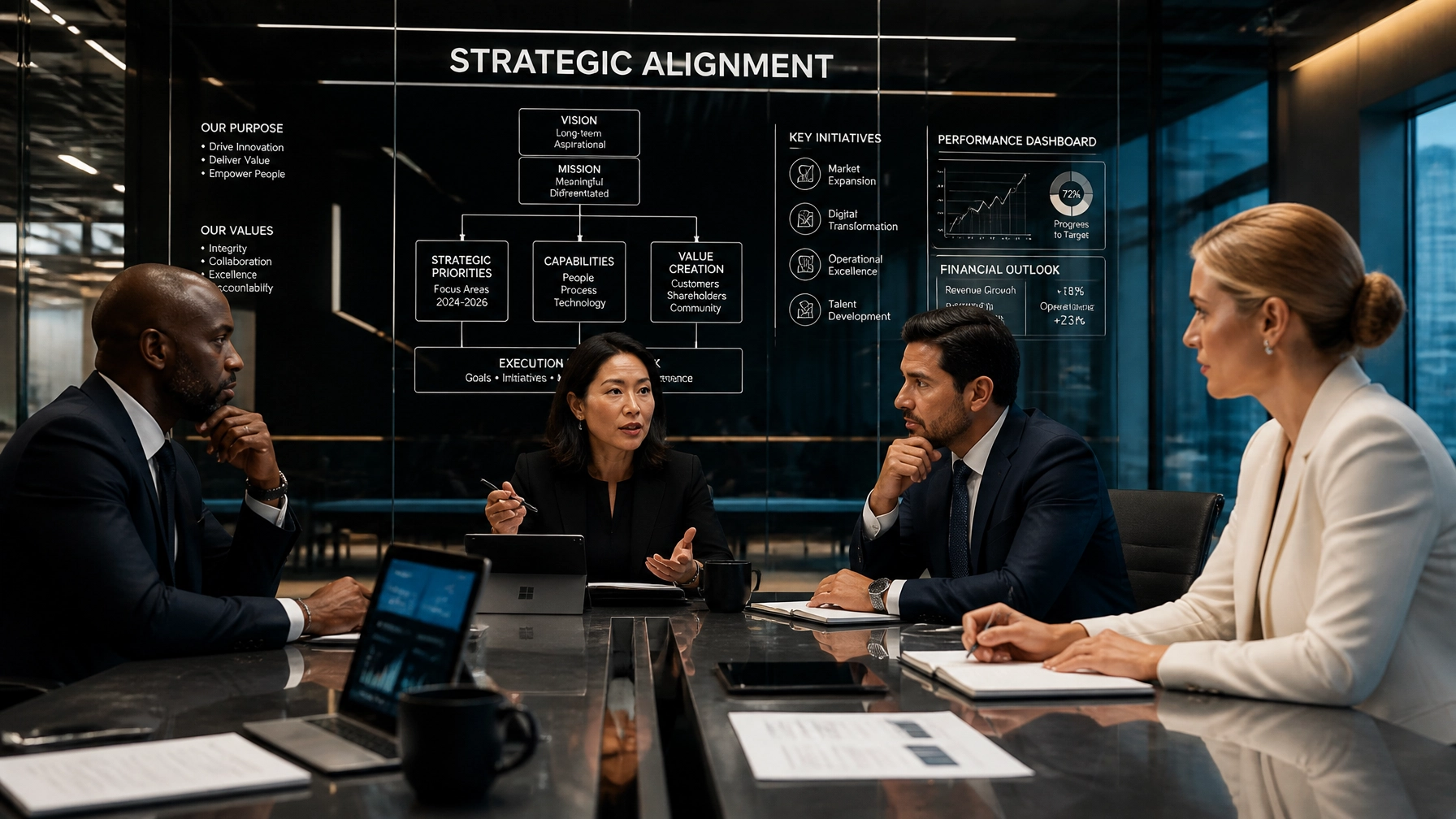
In the high-stakes environment of executive leadership, the most dangerous threat to your organization is not a competitor: it is a reactive calendar. Most leadership teams operate under the illusion of strategy while actually functioning within a "reaction pattern." In this state, resources are not allocated based on long-term impact but are instead hijacked by whoever shouts the loudest or whichever crisis burns the brightest.
At Legacy Vanguard Scott Group (LVSG), we recognize that this pattern is a failure of the Leadership Operating System (the foundational structures and processes that govern how a team makes decisions and executes). To break this cycle, leaders must shift from a "firefighting" posture to a disciplined, value-based sequencing model. This is not just about time management; it is about protecting your Commander’s Intent: your Strategic Alignment: to ensure every hour spent by your team contributes to a lasting legacy.
The Tyranny of the Urgent vs. the Logic of Value
The primary reason leadership teams fail to execute their most important initiatives is the "Urgency Bias." Urgency hijacks value. When a minor operational fire erupts, the natural human response is to prioritize it over the "quiet" work: the foundational, unglamorous tasks that actually unlock future growth.
Consider a healthcare organization facing persistent nursing vacancies. The "loud" work is the daily scramble to fill shifts with expensive contract labor. The "quiet" work is the deep-tissue cultural repair and process improvement required to stabilize internal staffing. If the calendar is allowed to run the strategy, the team will spend 90% of their time on the scramble and 0% on the solution.
To reverse this, we implement a framework for Sequencing by Value. This requires a ruthless assessment of every initiative through two lenses: Strategic Impact and Dependency Position.

Step 1: The Value-Urgency Audit
Before a single meeting is booked, leadership must categorize all initiatives using a Value vs. Urgency Matrix. However, unlike a standard Eisenhower Matrix, we define "Value" strictly as it pertains to your long-term organizational health and cultural hardening.
- High Value / High Urgency (The Apex Zone): These are critical, time-sensitive missions that require direct executive oversight.
- High Value / Low Urgency (The Legacy Zone): This is where long-term success is won. It includes leadership development consulting, culture-building, and strategic infrastructure. This work is rarely loud, but it is always vital.
- Low Value / High Urgency (The Noise): These are the fires that distract you. The goal is to delegate or automate these through a structured Rhythm of Battle: your Operational Rhythm.
- Low Value / Low Urgency (The Waste): These are projects that should be terminated to reclaim bandwidth.
By scoring your current projects on a 1–5 scale, you gain immediate clarity on where your "Strategic Recruiting" and capital are being drained.
Step 2: The Dependency Lock (Foundation First)
Once you have identified your high-value targets, the next step is sequencing. Most leaders try to do the "exciting" work first. In a veteran-led firm like LVSG, we understand that Logistics: your Resource Management and Infrastructure: must precede the offensive.
In the civilian sector, this means identifying Prerequisites. You cannot scale a new service line if your middle management layer is fractured. Therefore, the management coaching and training for those leaders is a prerequisite that must be sequenced before the launch, even if the launch feels more "urgent."
We use Dependency Mapping to determine the actual execution order. If Project B (the loud, profitable launch) depends on Project A (the quiet, process-standardization work), then Project A must be the priority. Attempting to skip to Project B creates "organizational debt" that will eventually lead to a collapse in service quality.

Step 3: Implement the "Quietest Work First" Rule
The most disciplined leadership teams follow a counter-intuitive rule: Prioritize the quietest work.
Loud work (crises, emails, reactive meetings) will always find its way onto your calendar. Quiet work (strategic planning, 1:1 executive coaching for leaders, organizational design) will not. To protect the Legacy Zone, you must harden your calendar.
This involves establishing a clear Rhythm of Battle (Operational Rhythm). By setting a fixed Meeting Cadence for different types of work, you ensure that "firefighting" has a designated time and place, preventing it from bleeding into your strategic deep-work blocks.
For example, a high-performing organization might structure their week as follows:
- Monday Morning: Strategic Alignment (Commander’s Intent) to set the objectives for the week.
- Mid-Week: Operational Reviews to handle the "loud" tactical issues.
- Friday Afternoon: AAR (After Action Review or Strategic Debrief) to capture lessons learned and refine the Leadership Operating System.
Step 4: Sustaining the System Through Accountability
Strategy is not a document; it is a behavior. To move from a reaction pattern to a value-driven culture, you must integrate accountability into the core of your operations. This is where leadership development consulting becomes essential.
At LVSG, we help organizations define their Decision Rights: clarifying who has the authority to make which decisions so that the executive team is not pulled into low-level operational debates. When decision rights are clear, the "loud" work is pushed down to the appropriate level, freeing the senior leaders to focus on the "quiet" work that drives long-term value.
Furthermore, we utilize the AAR (Strategic Debrief) after every major initiative. By asking four simple questions: What did we expect? What actually happened? Why was there a gap? What will we do differently next time?: you turn every action into a measurable behavior change. This is the hallmark of a high-performance culture.

The Path to a Lasting Legacy
Stop letting your calendar run your strategy. Your time is the most valuable asset in your organization, and how you sequence your work determines whether you are building a legacy or simply surviving the day.
If your team is struggling with persistent vacancies, supervisor burnout, or a lack of strategic momentum, it is time to harden your culture. By adopting a disciplined approach to sequencing by value: prioritizing the quiet, foundational work that unlocks everything else: you move from a state of reaction to a state of mission-driven execution.
Legacy Vanguard Scott Group provides the dual-service model: linking executive coaching with a structured staffing engine: to help you achieve this transformation. We don't just offer advice; we provide the operating system for your success.
Who’s ready to harden their culture and build a legacy? 🔥 🌐 https://www.legacyvanguardscott.com/ 🌐

Ready to Align Your Strategy?
Explore our Capabilities Statement or Schedule a Consultation to learn how we can help you build a high-performance leadership operating system.
Leave a Reply