Author: Legacy Vanguard Scott Group

  • Struggling to Fill Vacancies? 5 Strategic Recruiting Solutions

    Struggling to Fill Vacancies? 5 Strategic Recruiting Solutions

    In the current high-stakes business environment, many organizations find themselves trapped in a cycle of reactive hiring. You identify a gap, post a generic job description, interview a handful of candidates who look good on paper, and hope for the best. Yet, the vacancy remains, or worse, is filled by someone who doesn’t align with your mission, leading to turnover and a direct hit to your bottom line.

    At Legacy Vanguard Scott Group (LVSG), we see this differently. Filling a vacancy isn’t just an HR checkbox; it is a leadership imperative. If you are struggling to find the right talent, the solution doesn’t just live in your recruiting software, it lives in your leadership philosophy.

    The Reciprocal Loop: Lead Better, Hire Better

    The "secret sauce" of the LVSG dual-service model is built on a simple, yet profound reciprocal loop: To Hire Better, You must Lead Better and to Lead Better, you must Hire Better.

    This isn't just a catchy phrase; it is an operational reality. When your leadership is fragmented, your "Commander’s Intent" (Strategic Alignment) is murky. If you cannot clearly articulate the mission and the "Ground Truth" (Current Operational Reality) of your organization, you cannot attract the high-caliber talent required to sustain it. Conversely, even the most visionary leader will eventually falter if they are surrounded by a team that lacks the discipline or skill set to execute the strategy.

    By improving your leadership "Climate" (Organizational Culture), you naturally become a magnet for top-tier talent. By refining your "Strategic Recruiting" (Tactical Talent Acquisition), you empower your leaders to spend less time on "Firefighting" (Crisis Management) and more time on high-level strategy.

    Here are five strategic recruiting solutions to break the cycle and ignite your organization's growth.


    1. Establish a Proactive Talent Pipeline (The Operational Rhythm)

    Most companies recruit reactively. They wait for a resignation before they start looking for a replacement. In military terms, this is failing to maintain a "Rhythm of Battle" (Operational Rhythm). To hire better, you must be in a constant state of "Strategic Scouting" (Proactive Talent Identification).

    A proactive pipeline involves:

    • Predicting Future Needs: Don’t just look at today’s vacancies. Look at your three-year growth plan. What roles will be critical then?
    • Engagement: Maintain a database of "Silver Medalists", candidates who were excellent but weren’t the right fit for a previous specific role.
    • Relationship Building: Networking should happen when you don’t have a vacancy. This ensures that when a "Flash to Bang" (Immediate Requirement) occurs, you already have a shortlist of vetted professionals ready to step in.

    Strategic leadership team surveying a digital talent map for proactive recruitment and talent acquisition.

    2. Implement Skills-Based Hiring over Credentials

    For too long, organizations have relied on degrees and specific job titles as proxies for talent. This "Old Way" of hiring creates unnecessary barriers and limits your talent pool. To lead better, you must value "Mission Capability" (Functional Competence) over a polished resume.

    Skills-based hiring involves using objective assessments and "Strategic Debriefs" (Structured Interviews) to measure what a candidate can actually do. This approach:

    • Expands the Pool: You gain access to nontraditional candidates, veterans, career-switchers, and self-taught experts, who possess the grit and adaptability your team needs.
    • Reduces Bias: By focusing on "Measurable Behavior" (Performance Metrics), you ensure that you are hiring the best person for the mission, not just the person who interviews the best.
    • Improves Retention: Candidates hired for their skills are often more engaged because their daily tasks align perfectly with their strengths.

    Explore our Services to see how we help leaders define these critical success profiles.

    3. Leverage Employee Referral Programs (The Internal Advocacy Loop)

    Your current team is your best "Force Multiplier" (Strategic Advantage) in recruiting. If your leadership has created a "High-Trust Environment" (Psychological Safety and Accountability), your employees will naturally want to bring their best peers into the fold.

    An effective referral program is more than just a bonus check. It is about "Culture Alignment." When an employee refers a candidate, they are putting their own reputation on the line. They won't refer someone who can't hack it or who will disrupt the "Team Cohesion" (Operational Unity).

    To maximize this:

    • Incentivize correctly: Offer rewards that matter, but also recognize the "Vanguard" (Lead) behavior of building the team.
    • Communicate the "Commander’s Intent": Make sure your team knows exactly what kind of talent the organization needs to reach the next "Objective" (Business Goal).

    4. Precision Sourcing through AI and Strategic Intelligence

    In 2026, relying on a "Post and Pray" method, posting a job and praying someone good applies, is a recipe for failure. To hire better, you must employ "Strategic Intelligence" (Data-Driven Sourcing).

    Using AI-powered tools allows you to scan the landscape for passive candidates, those who aren’t actively looking but would move for the right leadership opportunity. At LVSG, we believe in "Targeted Engagement." This means:

    • Personalized Outreach: High-level talent ignores generic LinkedIn messages. They respond to "Mission-Centric" (Purpose-Driven) invitations that show you understand their specific career trajectory.
    • Data Analytics: Use data to identify where your most successful hires come from and double down on those channels.

    Executives utilizing data analytics and AI for precision talent sourcing and strategic recruiting solutions.

    5. Future-Proofing via University and Veteran Partnerships

    To build a "Legacy" (Long-term Impact), you must invest in the next generation of leaders. Establishing strong partnerships with universities and veteran transition programs provides a steady stream of "Fresh Perspective" (Innovative Thinking) and "Disciplined Execution" (Proven Reliability).

    Veteran-led organizations, in particular, understand the value of a candidate who has been forged in high-pressure environments. By creating a clear "Translation Layer" (Career Mapping) for veterans and graduates, you show them that your company is a place where their leadership skills will be sharpened, not stifled.

    Check out our About Us page to see how our veteran-led philosophy shapes our approach to talent.


    The LVSG Difference: Hardening Your Culture

    The truth is, these five strategies only work if the foundation is solid. If your internal "Operating System" (Organizational Framework) is buggy, no amount of strategic recruiting will save you. New hires will see the cracks in your leadership and exit as quickly as they arrived.

    This is why we focus on the reciprocal loop. When we partner with a client through our Recruitment and Placement, we don't just find a body to fill a seat. We evaluate the leadership climate that the new hire will be walking into.

    Are your "Decision Rights" (Authority Frameworks) clear? Is your "Meeting Cadence" (Operational Communication) efficient? If the answer is no, we help you "Lead Better" so that your "Hire Better" strategy actually sticks.

    Moving Toward the Apex

    Filling vacancies shouldn't be a struggle; it should be a strategic "Deployment" (Resource Allocation). When you align your leadership development with your talent acquisition, you create a "Self-Sustaining Ecosystem" (Scalable Culture).

    Stop looking for quick fixes. Start building a legacy. Whether you need Executive Coaching to refine your leadership presence or a Capabilities Statement to understand how we can overhaul your HR functions, the time to act is now.

    Your organization’s success depends on the people you hire, but the people you hire depend on the leader you become.

    Who’s ready to harden their culture and build a legacy? 🔥 🌐 https://www.legacyvanguardscott.com/ 🌐
  • Are Your Managers Ready for 2026? Why Management Coaching and Training is the Best Retention Strategy

    Are Your Managers Ready for 2026? Why Management Coaching and Training is the Best Retention Strategy

    Let’s be real for a second: 2026 isn’t just a date on the calendar. It’s a looming deadline for your leadership team. If you’re still relying on the same management playbooks you used in 2019, or even 2023, you’re essentially trying to fight a modern high-tech battle with a wooden shield. The landscape has shifted. The workforce has changed. And if your managers aren’t equipped with the right tools, your best talent is going to walk right out the door.

    At Legacy Vanguard Scott Group, we see it every day. Companies wonder why their turnover is high despite "competitive salaries." The truth? People don’t quit jobs; they quit leaders who can’t navigate the complexities of the modern era. If you want to keep your top performers, you have to invest in your frontline and mid-level leaders today.

    The 2026 Horizon: Why Yesterday’s Leadership Won’t Cut It

    We are moving into an era where "command and control" is dead. In the military, we talk about Commander’s Intent: providing a clear goal and the "why" behind a mission, then allowing subordinates to determine the "how" (Strategic Alignment). In the civilian world, this translates to empowering your teams through autonomy and clarity.

    By 2026, the demand for transparency, emotional intelligence, and purpose-driven work will be at an all-time high. If your managers are still micromanaging or failing to provide a clear "Strategic Alignment" (Commander’s Intent), they are creating friction. Friction leads to heat, and heat leads to burnout.

    Diverse leadership team collaborating on strategic alignment for 2026 goals in a modern boardroom.

    Executive Coaching for Leaders: The Force Multiplier

    In the field, a "Force Multiplier" is a factor that dramatically increases the effectiveness of a group. In business, executive coaching for leaders is that multiplier.

    Many organizations treat training as a one-and-done event: a slide deck, a catered lunch, and a pat on the back. That’s not training; that’s an information dump. True development comes from consistent, personalized 1:1 coaching that drives measurable behavior change.

    Why is coaching the ultimate retention strategy?

    1. It Creates Psychologically Safe Zones: Coaches help managers understand how to build trust. When an employee feels safe, they stay.
    2. It Sharpens the "Operational Rhythm": In the military, we call this the Rhythm of Battle (Operational Rhythm). It’s the cadence of meetings, check-ins, and feedback loops that keep the unit moving. Coaching helps managers master this flow without suffocating their teams.
    3. It Identifies "Quiet Cracking": Before someone "Quiet Quits," they start "Quiet Cracking." A coached leader knows how to spot the signs of stress and intervene before it becomes a resignation letter.

    The "Strategic Debrief" (AAR) as a Retention Tool

    One of the most powerful tools we bring from the military into the corporate space is the After Action Review (AAR), or what we call a Strategic Debrief in the civilian sector.

    When a project ends: whether it was a win or a total disaster: most managers just move on to the next task. This leaves the team feeling like cogs in a machine. A Strategic Debrief allows the team to voice what worked, what didn't, and how they can improve together. It fosters a culture of continuous learning.

    When you invest in executive leadership development programs, you’re teaching your managers how to facilitate these debriefs. This makes employees feel heard and valued. It’s hard to leave a company where your voice actually matters.

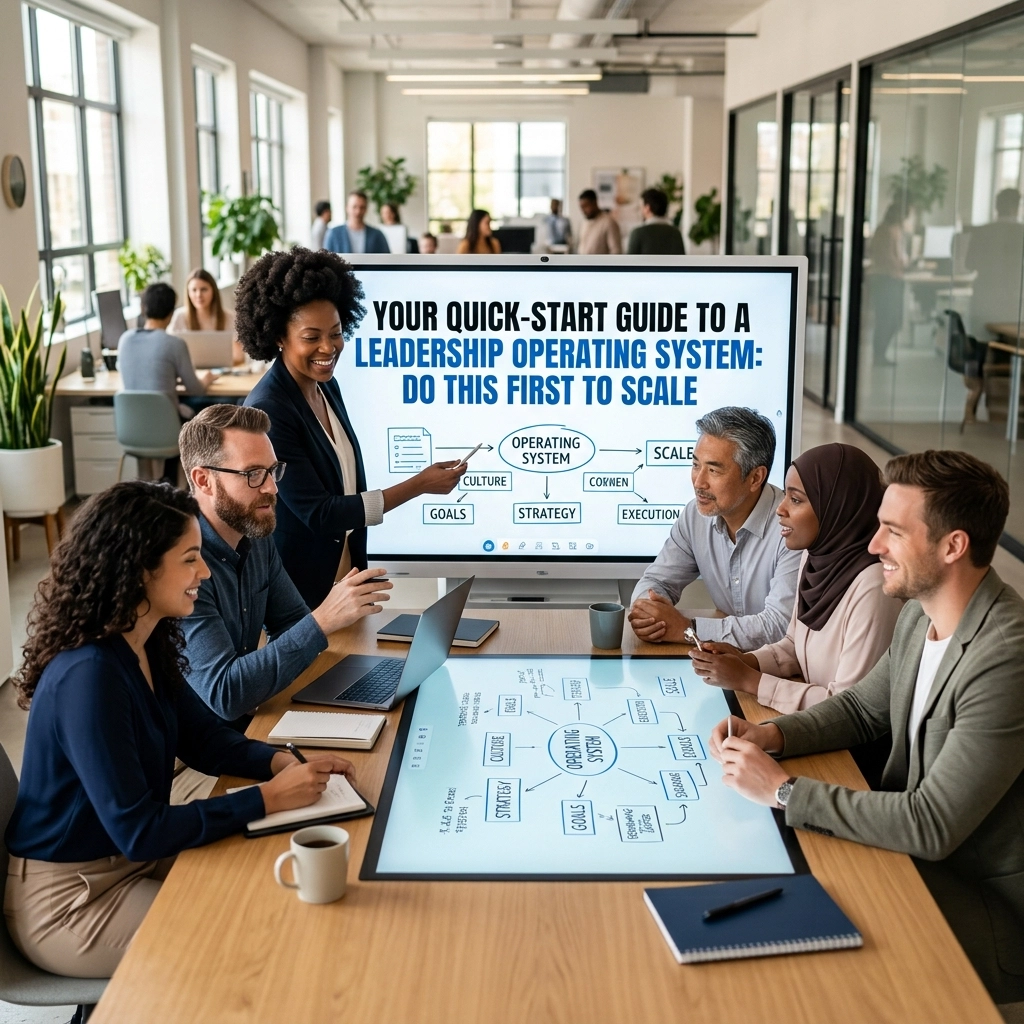
    Professional executive coaching for leaders session building trust and improving talent retention.

    Stopping the 68% Leak

    Research shows that engagement and culture issues account for roughly 68% of employee departures. That is a staggering number. It means that the majority of your turnover is preventable.

    Think of your managers as the "Operational OS" (Operating System) of your company. If the OS is buggy, the whole hardware (your company) crashes. By 2026, the expectations for this OS will be higher than ever. Employees want leaders who:

    • Can coach them through career plateaus.
    • Understand the balance between high performance and wellbeing.
    • Can communicate the "why" behind every "what."

    If your managers are just "passing down orders" without context, they are the leak in your bucket.

    Implementing an "Auditable" Leadership Framework

    At Legacy Vanguard Scott Group, we believe in discipline and accountability. We don't just give you "feel-good" advice. We help you build a leadership framework that is "Auditable": meaning you can track growth, measure engagement, and see the direct correlation between management training and retention rates.

    Whether it’s our Elevate or Apex programs, we focus on hardening your culture. We take the "Battle-Tested" rituals of high-stakes military leadership and translate them into "Business-Ready" strategies.

    Visualizing auditable leadership development programs and strategic operational rhythms for managers.

    The Cost of Waiting

    Waiting until 2026 to fix your leadership gap is a losing strategy. The "time-to-fill" for high-level roles is increasing, and the cost of replacing a mid-level manager can be up to 200% of their annual salary.

    Management coaching isn't an "expense." It’s an insurance policy for your most valuable asset: your people. When you provide executive coaching for leaders, you aren't just helping them perform better; you are telling them: and their teams: that they are worth the investment. That creates a legacy of loyalty.

    Prepare for the Future Today

    If you want to move from "surviving" to "thriving," you need to audit your current leadership capabilities. Are your managers prepared to handle a multi-generational, hybrid, and highly mobile workforce in 2026?

    It’s time to move past the quick fixes. It’s time to ignite a transformation that starts at the top and trickles down to every single person in your organization. Empower your leaders, strengthen your culture, and watch your retention problems disappear.

    Who’s ready to harden their culture and build a legacy? 🔥 🌐 https://www.legacyvanguardscott.com/ 🌐

    Diverse corporate leaders walking together to build a legacy of purpose-driven performance.

    Why Legacy Vanguard Scott Group?

    We don't do fluff. We bring a tiered, modular approach to leadership development that balances military rigor with purpose-driven outcomes. Our programs are custom-tailored to fit your specific organizational needs, ensuring that your managers aren't just "ready" for 2026: they are leading the charge.

    From Strategic Recruiting Solutions to Executive Leadership Development Programs, we are here to ensure your company isn't just a place to work, but a place to grow.

    Let’s get to work.

    🌐 https://www.legacyvanguardscott.com/services 🌐

  • Strategic Recruiting Solutions vs. Crisis Hiring: Why Your Retention Engine Is Stalling

    Strategic Recruiting Solutions vs. Crisis Hiring: Why Your Retention Engine Is Stalling

    We’ve all seen it happen. A key manager walks into the office, places a resignation letter on the desk, and suddenly the air leaves the room. Within ten minutes, the "Crisis Hiring" alarm is blaring. You’re not looking for the best fit anymore; you’re looking for a "warm body" with a pulse and a LinkedIn profile.

    This is what we call a tactical reaction: a "Hair on Fire" response to a talent gap. In the military, we might call this an emergency field repair. It gets the vehicle moving for another mile, but it doesn’t win the campaign. In the corporate world, this cycle of reactive hiring is the silent killer of organizational growth.

    At Legacy Vanguard Scott Group (LVSG), we see this play out in companies of all sizes. They believe they have a "recruiting problem," but in reality, they have a "Strategic Alignment" problem (what we veterans call Commander’s Intent). If you are constantly hiring in a state of emergency, your retention engine isn't just stalling: it’s probably missing a few gears entirely.

    The High Cost of the "Warm Body" Strategy

    Crisis hiring is expensive. We’re not just talking about the recruiter fees or the job board spend. We’re talking about the "Cultural Friction" (the civilian equivalent of internal friction that slows down operations). When you rush a hire to fill a gap, you often bypass the critical checks for culture-alignment and long-term potential.

    The result? A "leaking bucket" effect. You pour new talent in the top, and because the culture hasn't been hardened and the leadership isn't prepared to integrate them, they leak out the bottom within six months. This creates a "Rhythm of Battle" (Operational Rhythm) that is entirely reactive. You aren't leading; you’re just dodging the next resignation.

    Executive addressing crisis hiring challenges in a corporate boardroom

    Strategic Recruiting Solutions: The Proactive Alternative

    Strategic recruiting isn't just about finding people; it’s about Strategic Workforce Planning. It is the "Apex" level of HR staffing for small business and mid-market firms. Instead of waiting for a vacancy, a strategic approach involves building a talent pipeline that mirrors your long-term growth objectives.

    When we talk about "Strategic Recruiting Solutions," we are talking about a disciplined, auditable process. At LVSG, we help our clients move from "firefighting" to "fire prevention." This involves:

    1. Defining the Mission: What does this role actually need to achieve? (Strategic Alignment).
    2. Building the Bench: Identifying talent before you need it.
    3. Auditable Staffing Engine: Creating a repeatable, data-driven process that ensures every hire is a force multiplier, not just a seat-filler.

    If your current recruitment process feels like a roll of the dice, it’s time to look at our recruitment and placement services. We don't just find people; we find the right people who are ready to uphold your legacy.

    Why Your Retention Engine is Stalling

    You can have the best recruiters in the world, but if your leadership "Operating System" is buggy, nobody will stay. Retention is the byproduct of effective leadership and a purpose-driven culture. If your retention engine is stalling, look at these three areas:

    1. Lack of Strategic Alignment (Commander’s Intent)

    If your team doesn’t know where the "North Star" is, they will drift. Employees stay when they feel their work has a lasting impact. When leaders fail to communicate the "why" behind the "what," engagement plummets.

    2. Broken Operational Rhythm (Rhythm of Battle)

    Is your office a chaotic mess of "urgent" meetings and shifting priorities? A broken operational rhythm burns people out. High performers want discipline and clarity. They want to know that their time is being respected and their efforts are moving the needle.

    3. Stagnant Leadership Development

    People don’t quit jobs; they quit leaders who stop growing. If you aren't investing in Executive Coaching for Leaders, you are signaling to your top talent that there is a ceiling on their own development.

    Diverse leaders collaborating on strategic alignment and executive development

    The LVSG Model: Hardening Your Culture

    At Legacy Vanguard Scott Group, we don’t believe in quick fixes. We believe in building a "Vanguard" of leaders who are equipped to handle the complexities of the modern workforce. Our approach to Leadership Development & HR Consulting is rooted in the same discipline and accountability found in elite military units, translated into high-impact corporate strategies.

    We help you build an Auditable Staffing Engine. This means every part of your hiring and retention process is measurable, repeatable, and aligned with your core values. No more "gut feelings" that lead to 90-day turnovers. We implement "Strategic Debriefs" (After Action Reviews or AARs) into your hiring process to ensure that every win and every loss becomes a learning opportunity for the organization.

    Leadership team walking with purpose to improve operational rhythm and recruiting

    Executive Coaching: The Secret Weapon of Retention

    If you want to stop the "Crisis Hiring" cycle, you have to start at the top. Strategic recruiting solutions work best when the leadership team is prepared to receive and grow that new talent. This is where Executive Coaching for Leaders becomes a non-negotiable asset.

    Custom-tailored coaching helps executives identify their blind spots: those subtle "leadership glitches" that might be driving talent away. Whether it’s improving communication, delegating with authority, or mastering the art of the "Strategic Alignment" (Commander's Intent), coaching provides the personalized 1:1 focus needed for breakthrough performance.

    Ready to see how your leadership stack measures up? Check out our Executive Coaching Intake Form to start the conversation.

    Executive coaching session focused on leadership growth and employee retention

    Moving Toward a Lasting Legacy

    The transition from crisis hiring to strategic recruiting doesn't happen overnight. It requires a commitment to excellence and a willingness to audit your current "Operating System." You have to be willing to ask: Are we hiring to survive the week, or are we hiring to build a legacy?

    When you choose to lead with discipline and purpose, you stop being a victim of the "Great Resignation" or whatever the latest market trend is called. You become the organization that talent wants to join because they see a clear path, a strong culture, and a leadership team that is invested in their success.

    Key Takeaways for Your Leadership Team:

    • Audit Your Rhythm: Stop the "Hair on Fire" meetings. Establish a consistent Operational Rhythm (Rhythm of Battle) that prioritizes strategy over urgency.
    • Define the Target: Ensure every role has a clear "Strategic Alignment" (Commander’s Intent). If a new hire doesn't know how they contribute to the mission, they won't stay.
    • Invest in the Engine: Recruiting is the fuel; leadership is the engine. If the engine is broken, the fuel doesn't matter.
    • Measure Everything: Use an auditable staffing model to take the guesswork out of your HR functions.

    At LVSG, we are here to help you navigate these shifts. We empower organizations to strengthen their core, elevate their people, and achieve top-tier results. Whether you need a complete HR overhaul or a targeted Capabilities Statement to understand our full range of tactical and strategic support, we are ready to deploy.

    Don't wait for the next resignation to start thinking about your talent strategy. The best time to fix a leaking bucket is before you try to fill it again. Let’s move your organization from a state of crisis to a state of strategic dominance.

    Who’s ready to harden their culture and build a legacy? 🔥 🌐 https://www.legacyvanguardscott.com/ 🌐

  • From Raw Potential to Remarkable Performance: The Story Every Hiring Manager Should Pay Attention To

    From Raw Potential to Remarkable Performance: The Story Every Hiring Manager Should Pay Attention To

    The sports world is often the ultimate proving ground for human performance, providing a high-stakes environment where the difference between success and failure is measured in inches and seconds. On draft day 2026, the Philadelphia Eagles made a move that didn’t just shake up the NFL: it provided a masterclass in Strategic Recruiting (Personnel Selection) for every corporate leader and hiring manager across the globe.

    The story of Uar Bernard is not just a sports headline; it is a profound lesson in identifying and cultivating raw potential. Bernard, the Eagles’ seventh-round pick, had never played a single down of organized football. Not in high school, not in college. To the traditional recruiter, his "resume" was a blank page. To a visionary leader, however, he was a goldmine of Untapped Potential (Latent Capability).

    At 6’4”, 306 pounds, boasting six percent body fat, a 4.63 forty-yard dash, and a 39-inch vertical, Bernard redefined what is possible through sheer discipline and Commander’s Intent (Strategic Alignment) focused on personal excellence.

    For the Legacy Vanguard Scott Group, this story resonates deeply. It mirrors the work we do in Leadership Development and HR consulting: bridging the "Invisible Gap" between where a candidate stands today and the high-impact contributor they are destined to become.

    The Resume Trap: Why Experience is a Lagging Indicator

    Most hiring managers are trained to look backward. They scan resumes for past titles, years of service, and familiar brand names. While experience has value, it is often a Lagging Indicator (Result-Oriented Metric): it tells you what someone did in a different environment, under different leadership, with different resources.

    Uar Bernard had zero experience. If an AI screening tool had processed his application based solely on "years of organized football," he would have been discarded instantly. This is the "Resume Trap" that plagues modern corporate recruiting. According to research from Harvard Business School, nearly 88% of employers acknowledge that highly qualified candidates are often vetted out of the process because they do not match every exact, rigid criteria: even though these individuals possess the foundational drive to excel.

    Hiring manager in a modern office identifying untapped talent and raw potential.

    When we focus exclusively on history, we ignore Trainability (Learning Agility). Bernard’s success wasn't rooted in his knowledge of a playbook; it was rooted in his commitment to growth. In the corporate world, we call this hiring for the "Future State" rather than the "Status Quo."

    Identifying the Five Pillars of High-Potential Talent

    To replicate the success of the Eagles' scouting department, leaders must shift their Rhythm of Battle (Operational Rhythm) from searching for the "perfect fit" to searching for the "perfect engine." At Legacy Vanguard Scott Group, we emphasize five critical pillars that signal a candidate’s ability to move from raw potential to remarkable performance.

    1. Coachability and Humility

    Bernard stepped onto a football field knowing nothing of the technical intricacies of the offensive line. He had to be a "sponge." In a business context, coachability is the ability to receive a Strategic Debrief (After-Action Review) and immediately apply the lessons to the next task. A candidate who knows they don’t know everything: but is desperate to learn: is infinitely more valuable than a seasoned pro who is set in their ways.

    2. High Performance Under Pressure

    The physical stats Bernard produced: the 4.63 forty-yard dash at 306 pounds: are staggering. But more impressive is the mental fortitude required to perform those feats under the watchful eyes of scouts and coaches. We look for individuals who demonstrate Operational Durability (Resilience) when the stakes are high. Can they maintain their "operating system" when the deadline is looming and the pressure is mounting?

    3. Adaptability in New Environments

    Moving from a non-football background to the NFL is the ultimate "cultural shift." In leadership, we see this when executives move between industries. Those who succeed are the ones who don't try to force the new environment to fit their old habits. They adapt. They learn the new Decision Rights (Authority Matrices) and align themselves with the mission quickly.

    4. A Mindset of Continuous Improvement

    Six percent body fat at 306 pounds does not happen by accident. It is the result of thousands of small, disciplined choices made over years. This is the "Stealth Driver" of success. When hiring, look for the person whose personal Standard Operating Procedures (Individual Habits) reflect a commitment to excellence that exists outside of their job description.

    5. Resilience: The Ability to Fail Forward

    Bernard undoubtedly faced moments of frustration while learning a sport from scratch. Resilience is the "Hardware" of a high performer. You can teach a skill, but you cannot easily teach the grit required to stay in the fight when things get difficult.

    A professional transitioning from raw athletic potential to high-performance leadership.

    The "Civilian Translation": Moving From Athletics to the Boardroom

    At Legacy Vanguard Scott Group, we often use military and athletic metaphors because they represent the purest forms of leadership and discipline. However, the translation to the corporate sector is direct and actionable.

    When we talk about Strategic Recruiting (Personnel Acquisition), we aren't just talking about filling a seat. We are talking about building a Legacy (Long-term Impact).

    Hiring managers often engage in "Crisis Hiring": filling a gap with a "warm body" because the workload is too high. This is a short-term fix that creates long-term drag. Instead, leaders should look for "Difference-Makers": those individuals who, like Bernard, may require an initial investment in training but will eventually elevate the entire team’s capability.

    When you hire for potential, you aren't just buying someone's time; you are investing in their Capacity to Grow (Scalability).

    Hardening Your Culture to Support Potential

    You cannot hire a Uar Bernard and drop him into a broken culture. A high-potential hire requires a high-performance environment to thrive. If your organization lacks clear Commander’s Intent (Strategic Alignment) or a structured Executive Coaching program, that raw potential will simply wither or, worse, leave for a competitor who can cultivate it.

    To turn raw potential into remarkable performance, your leadership "Operating System" must include:

    • Clear Expectations: Does the hire know exactly what winning looks like?
    • Feedback Loops: Are you providing regular, data-driven assessments of their progress?
    • Resource Alignment: Do they have the tools and mentorship required to bridge the gap between their current skills and their potential?

    Diverse executive team conducting a strategic alignment session for corporate growth.

    Beyond the Traditional Resume

    The next time you are reviewing a stack of resumes for a critical role, I challenge you to look for the "Bernards." Look for the veteran who is transitioning to a new field, the career-changer with a history of rapid promotions, or the candidate who lacks the "specific industry experience" but has a track record of mastering complex tasks.

    In the corporate world, leaders win when they see beyond the history and recognize the qualities that can’t be taught: drive, character, and the ability to rise to a challenge.

    Uar Bernard is a reminder that the best hire isn’t always the one who has done the job before. Sometimes, the best hire is the one with the greatest capacity to grow, the discipline to outwork the competition, and the heart to redefine what is possible for your organization.

    Stop hiring for where your company has been. Start hiring for where your company is going.

    Are you ready to stop "Crisis Hiring" and start building a team of high-performers? Our Recruitment and Placement services focus on identifying the "Invisible Gap" in your talent pipeline and filling it with individuals who are built for the long haul.

    Who’s ready to harden their culture and build a legacy? 🔥 🌐 https://www.legacyvanguardscott.com/ 🌐

  • Beyond the Framework: Why Your Leadership Certification Isn’t Saving Your Team

    Beyond the Framework: Why Your Leadership Certification Isn’t Saving Your Team

    For decades, the corporate world has operated under a persistent illusion: that a new certification, a weekend seminar, or a prestigious acronym behind a name is the magic key to unlocking team performance. Organizations pour billions into executive leadership development programs, hoping that if they just provide the right "software": the frameworks, the communication models, and the tactical checklists: the "hardware" will automatically improve.

    But here is the reality that many high-level leaders realize too late: You can’t run 2026 software on a 1995 operating system.

    If you are a mid-to-senior level leader feeling exhausted, quietly or chronically, despite having every credential in the book, you aren't lacking skills. You are facing an internal capacity gap. In the military, we call this a failure in Battlefield Circulation (Strategic Presence). If the leader is not internally grounded, they cannot effectively circulate through the organization to maintain standards and morale.

    At Legacy Vanguard Scott Group, we call this the 80/20 Rule of Leadership. Skills, frameworks, and certifications represent only 20% of the solution. The other 80%: the part that actually determines whether your leadership holds or breaks: is entirely internal.

    The Certification Trap: Software vs. Hardware

    Most leadership operating systems are built on the assumption that leadership is an external skill set. We are taught to design curricula, manage instructional shifts, and build team development models. These are valuable. They are the "software" that allows us to execute specific tasks.

    However, software is useless if the hardware: your internal capacity: is crashing.

    When a leader is carrying unexamined internal weight, it doesn't matter how many certifications they hold. That weight enters every meeting, every decision, and every high-stakes interaction. You might have the "best" framework for conflict resolution, but if your internal Rhythm of Battle (Operational Rhythm) is dictated by anxiety or a need for external validation, the framework will fail the moment the pressure rises.

    Hispanic executive leader maintaining focus and internal capacity amid organizational noise.

    The "Invisible Gap": Where Development Usually Stops

    Traditional executive leadership development programs often skip the most difficult part of the work because it isn't easy to measure with a multiple-choice test. They focus on what you do, rather than who you are while you are doing it.

    This creates an "Invisible Gap." You are doing everything "right" on paper, yet your life feels flat, your calendar is overflowing, and your team’s culture is stagnant. This gap exists because you haven't addressed the five critical pillars of internal capacity:

    1. Emotional Patterns and Costs

    Every leader has emotional "defaults." Some push harder when they feel out of control; others withdraw. If you don't understand your patterns, you are a slave to them. In a high-stakes environment, this is the equivalent of losing Situational Awareness (Operational Context). If you don’t know what’s happening inside you, you can’t accurately assess what’s happening around you.

    2. The Art of Self-Regulation

    Many leaders mistake "pushing through" for resilience. It isn't. Pushing until something gives is a sign of a faulty Leadership Operating System. True self-regulation is the ability to maintain clarity and composure under fire without depleting your core reserves.

    3. Language for the Invisible

    We are often taught the language of KPIs and ROI, but we lack the language for the "internal load." If you can’t name what you are carrying: whether it's the weight of a failing project or the pressure of organizational politics: you cannot set it down.

    4. Examination of Belief Systems

    Are you waiting for "better leadership" to arrive? Are you waiting for the culture to shift before you take a stand? These are internal belief gaps. They keep you in a state of hesitation rather than moving with Commander’s Intent (Strategic Alignment).

    5. Energy Protection

    Leadership is an endurance sport. If you haven't learned how to protect your energy during seasons that take everything, you will lead in ways that are fundamentally unsustainable.

    Executive leader gaining situational awareness and strategic clarity beyond the invisible gap of leadership.

    The High Cost of Unexamined Internal Gaps

    The cost of ignoring the 80% isn't abstract. It shows up in the most expensive ways possible for an organization. When leaders operate with internal capacity gaps, the organization suffers from:

    • The Conversations That Don’t Happen: Leaders who lack internal regulation often avoid necessary but uncomfortable conversations, allowing toxic behaviors to fester.
    • Quietly Lowered Standards: Exhausted leaders eventually stop holding the line. They trade excellence for peace, leading to a slow decay in the Standard Operating Procedures (Operational Excellence).
    • Talent Attrition: High-performing employees don't leave because of the work; they leave because the environment feels heavy. If the leaders closest to them never had the space to shift their internal state, the culture becomes stagnant.
    • The Credibility Gap: This is the distance between what a leader says and how they actually "show up." When the language changes (thanks to a new certification) but the energy remains stressed and reactive, trust evaporates.

    Translating the Battlefield to the Boardroom

    In elite military units, we perform a Strategic Debrief (After Action Review – AAR) after every mission. We don't just look at the tactics; we look at the decision-making process and the mental state of the team. We ask: Why did we hesitate? Where did the communication break down?

    Corporate leadership needs the same rigor. We need to stop asking "What skills do our leaders need?" and start asking "What internal weight are our leaders carrying?"

    By focusing on the internal leadership operating system, we empower leaders to move from a state of "pushing" to a state of "leading." This is where the real work lives. It’s not in a framework; it’s in the gap between who you are and who you are capable of becoming.

    Building a Legacy of Internal Strength

    If you are a senior executive or a business owner, look at your development strategy. Are you just buying more software? Are you sending your people to get certifications that will be 75% forgotten within a week?

    Or are you investing in the hardware?

    True transformation happens when we bridge the gap between external expertise and internal capacity. When a leader understands their own emotional landscape, regulates their energy, and acts with clear Commander’s Intent (Strategic Alignment), they become unstoppable. They don't just manage teams; they build legacies.

    Diverse executives showing the ripple effect of high internal capacity and strategic alignment.

    At Legacy Vanguard Scott Group, we specialize in this "Inside-Out" approach. We combine the tactical precision of veteran leadership with the deep, personalized work of executive coaching. We help you identify the internal gaps that no certification can reach, ensuring your leadership isn't just effective, but sustainable.

    The most expensive leadership gap in your organization isn't a skills gap. It's the 80% that no one is developing. It's time to go beyond the framework and start doing the real work.

    Ready to elevate your leadership?

    Explore our Executive Coaching Services or learn more about our Leadership Philosophy.

    Who’s ready to harden their culture and build a legacy? 🔥 🌐 https://www.legacyvanguardscott.com/ 🌐

  • The 80/20 Rule of Leadership: Is Your Development Strategy Ignoring the Most Important Part?

    The 80/20 Rule of Leadership: Is Your Development Strategy Ignoring the Most Important Part?

    For years, high-performing leaders have operated under a persistent, expensive illusion: the belief that the solution to their most pressing organizational challenges lies somewhere outside of themselves. They search for a better framework, a more efficient project management tool, or a new certification to hang on the wall. They wait for a shift in market conditions or for the "right" senior leadership to arrive and clear the path.

    But for the veteran-led executive or the mission-driven director, there comes a moment of radical clarity: a realization that the bottleneck isn't the system, the budget, or the team. The bottleneck is the leader’s own internal capacity.

    In this first installment of "The Invisible Gap" series, we are deconstructing the 80/20 Rule of Leadership. While the Pareto Principle traditionally suggests that 80% of results come from 20% of effort, in the context of leadership development, the ratio is even more critical: 80% of your success is driven by your internal capacity: your "Hardware": while only 20% is driven by your external skills and frameworks: your "Software."

    If your internal operating system is crashing, no amount of high-end software will save the mission.

    The Mirage of the External Fix

    Most leadership development strategies are heavily weighted toward the 20%. Organizations pour millions into technical training, curriculum design, and instructional leadership frameworks. These are necessary components: the SOPs (Standard Operating Procedures / Business Process Standards) that keep the gears turning. However, they are superficial.

    When a leader is exhausted, chronically stressed, or emotionally unregulated, those frameworks fail. They fail because the leader is attempting to run complex, high-stakes programs on "hardware" that is overheating.

    We see this manifest in the mid-level leader who possesses elite expertise in Logistics (Supply Chain and Resource Management) but cannot maintain a stable team because they haven't examined the internal beliefs driving their need for total control. We see it in the executive who can articulate a brilliant Commander’s Intent (Strategic Alignment) on paper but fails to inspire the troops because their own internal regulation is brittle.

    A focused executive reflects on leadership development and internal capacity in a high-stakes boardroom setting.

    Decoding the 80/20 Split: Hardware vs. Software

    To improve organizational culture and drive long-term impact, we must distinguish between these two layers of development.

    The 20%: The Software (External Skills)

    This is what most "leadership books" sell. It includes:

    • Project management methodologies.
    • Financial literacy and budgeting.
    • Public speaking and communication tactics.
    • Technical certifications.
    • Meeting structures and Rhythm of Battle (Operational Rhythm).

    While these are the tools of the trade, they are essentially modular. You can swap one software for another, but they all depend on the underlying system to function.

    The 80%: The Hardware (Internal Capacity)

    This is the "Invisible Gap" where 80% of the solution lives. It is the realm of executive coaching for leaders: the deep, internal work that examines the "Operating System" itself. This includes:

    • Emotional Regulation: The ability to remain calm and decisive under fire without defaulting to "pushing" until something breaks.
    • Belief Systems: Examining the subconscious scripts that dictate what you believe you are allowed to say, do, or want.
    • Energy Management: Understanding how to protect and deploy your personal energy as a finite strategic resource.
    • Language and Narrative: Developing the internal vocabulary for what you are carrying so you can effectively set it down.

    The Stealth Costs of the Internal Gap

    Ignoring the 80% isn't just a personal failing; it is a strategic liability. The most expensive leadership gap in your organization isn't a lack of skills: it is the unexamined internal weight that leaders carry into every decision.

    When a leader lacks internal capacity, the organization pays for it through:

    1. The Conversations That Don’t Happen: Fear of conflict or internal hesitation leads to avoided accountability, which eventually erodes the SOPs (Business Process Standards).
    2. Quietly Lowering Standards: When a leader is at capacity, they stop coaching and start settling. They no longer have the bandwidth to uphold excellence.
    3. Talent Attrition: High-performers do not leave because the work is hard; they leave because the environment feels stagnant or reactive. This is often a direct reflection of a leader who is "leading in ways they cannot sustain."

    Improving organizational culture requires more than a new mission statement. It requires leaders who have the internal space to shift first.

    Symbolic silhouette highlighting internal capacity and emotional regulation for improving organizational culture.

    Running a Strategic Debrief on Your Internal OS

    In the military, we rely on the AAR (After Action Review / Strategic Debrief) to analyze what happened, why it happened, and how to improve. To apply the 80/20 rule to your own leadership, you must conduct a Strategic Debrief on your internal state.

    Ask yourself:

    • Where am I experiencing "motion" without "progress"?
    • Am I relying on external "software" (new hires, new tools) to fix a "hardware" issue (my own exhaustion or hesitation)?
    • Does my Rhythm of Battle (Operational Rhythm) allow for the internal maintenance required to lead at a high level?

    If you find that you are ending up in "maintenance mode" more often than not, it is a sign that your internal capacity gap is widening. This is where executive coaching for leaders becomes the most tactical investment an organization can make. It is the process of hardening the hardware so that the software can finally perform as intended.

    Building a Legacy from the Inside Out

    At Legacy Vanguard Scott Group, we prioritize the 80%. We understand that you cannot build a lasting legacy on a fractured foundation. Our approach to leadership development and HR consulting integrates the rigor of veteran-led discipline with the deep, personalized work of internal capacity building.

    We don't just give you a new playbook; we help you become the leader capable of executing it. Whether through Strategic Recruiting to find talent that aligns with your hardened culture, or through 1:1 coaching to expand your internal "Decision Rights," our goal is measurable behavior change that leads to breakthrough performance.

    The 80/20 Rule reminds us that the most powerful lever for change is not outside of you. It is the work you have been avoiding: the work that happens beneath the busyness.

    Diverse executives engaged in coaching for leaders and strategic debriefing to drive breakthrough performance.

    Elevate Your Operating System

    If your organization is stuck in a cycle of "more work, less impact," it’s time to stop looking for external solutions and start addressing the internal capacity gaps. The cost of waiting for the "right conditions" is too high. The conditions are created by the leader.

    Legacy is not built by those who simply work harder. It is built by those who lead with clarity, discipline, and an unshakeable internal foundation.

    Who’s ready to harden their culture and build a legacy? 🔥 🌐 https://www.legacyvanguardscott.com/ 🌐

    For a deep dive into our methodology, explore our Capabilities Statement or contact us directly to begin your Executive Coaching Intake.

  • Culture is an Outcome: Why Leading Your Climate is the Secret to Real Change

    Culture is an Outcome: Why Leading Your Climate is the Secret to Real Change

    "How do I change the culture of my organization?"

    It is the single most common question I hear from CEOs and founders who feel their teams are drifting. They see the symptoms: silos forming, high turnover in key departments, a lack of initiative: and they decide it’s time for a "Culture Initiative." They hire consultants to write new mission statements, print posters for the breakroom, and hold all-hands meetings to announce "The New Way."

    And yet, six months later, nothing has changed. Why?

    Because culture is not a lever you can pull. Culture is an outcome. It is a byproduct. Attempting to manage culture directly is like trying to change the score on a scoreboard without changing how the team plays the game. If you want a different score, you have to look at the environment where the game is played. You have to look at the Climate.

    At Legacy Vanguard Scott Group (LVSG), we believe that to achieve true Strategic Alignment (Commander’s Intent), you must stop obsessing over the "result" of culture and start mastering the "input" of climate.

    Climate vs. Culture: Understanding the Difference

    Think of it this way: Culture is the long-term weather pattern of a region: the desert is hot and dry; the rainforest is humid and lush. Climate, however, is what is happening outside right now. It is the immediate reality your team experiences in real-time.

    While culture is a long-term pattern that solidifies over years, climate is the environment you create daily. It reflects what you prioritize, what you tolerate, and, most importantly, how you behave when the pressure is on.

    Diverse leaders strategizing in a command center, demonstrating proactive organizational climate leadership.

    Many leaders mistake the two. They think that by defining a "culture of excellence," the climate will follow. In reality, it is the other way around. Your daily decisions, your Operational Rhythm (Rhythm of Battle), and your consistency under stress shape the climate. Eventually, that climate hardens into your culture. If you don't like your culture, you have a climate problem.

    The Gap Between Intent and Experience

    Leaders often attempt to shift culture through corporate initiatives. However, there is a fundamental truth every executive must internalize: Employees do not experience initiatives; they experience interactions.

    A massive gap often forms between a leader’s stated intent and the employee’s daily experience. This is where your Leadership Operating System (LOS) either thrives or breaks down. Consider these common disconnects:

    1. The Transparency Gap

    If your "Culture Document" claims to value openness and transparency, but your leadership team withholds information or makes critical decisions behind closed doors, your climate signals secrecy. Your team doesn't believe the document; they believe the behavior.

    2. The Accountability Gap

    If you emphasize high standards but apply them inconsistently: perhaps giving a "pass" to a high-performer who is toxic to the team: your climate becomes unpredictable and cynical. You are teaching your team that your "values" are actually suggestions.

    3. The Retention Gap

    People rarely quit because of a strategic plan. They don’t walk out the door because they disagree with your three-year revenue goals. They leave because of how they feel when they show up to work on a Tuesday morning. They leave the climate. If the environment is one of "survival" rather than "thriving," your top talent will eventually find an exit.

    Leading the Environment to Shape the Result

    Changing a culture overnight is impossible. It is a slow-moving glacier. But you can change the climate today. To do this, you must focus on the practical inputs you control. In our work with high-growth organizations, we focus on three core pillars to calibrate the climate.

    Reinforce Specific Behaviors

    You must decide exactly which actions receive your praise and which require correction. In a military context, we look at this through the lens of "The Standard." If you walk past a mistake without correcting it, you have just set a new, lower standard.

    In your business, if you claim to value "collaboration" but only reward individual "rockstars," you are reinforcing a climate of internal competition. To change the climate, you must reward the behaviors that align with your Strategic Alignment (Commander’s Intent).

    Executive mentoring a manager on strategic alignment and reinforcing positive organizational behaviors.

    Model Consistency Under Pressure

    Anyone can be a "values-based leader" when things are going well. The true test of your Leadership Operating System happens when a major client leaves, a product launch fails, or the economy shifts.

    Do you stay calm and focused on the mission? Or do you panic and start looking for someone to blame? Your team is watching you most closely when things are going wrong. Your decisions under stress are the most powerful climate-shaping tools you have. Consistency builds trust; volatility builds anxiety.

    Define "Right"

    You cannot expect excellence if you haven't clearly defined what "Right" looks like. This goes beyond a job description. It means setting clear, unwavering expectations for how we communicate, how we handle conflict, and how we deliver results. When everyone knows what the standard is, the climate becomes one of clarity and confidence.

    Calibrating Through the Strategic Debrief

    One of the most effective ways to manage your climate is through the Strategic Debrief (After Action Review, or AAR). This isn't just a meeting to talk about what happened; it’s a tool to evaluate whether our actions matched our intent.

    By regularly conducting a Strategic Debrief, you ask the hard questions:

    • What was our intent?
    • What actually happened?
    • Why was there a gap?
    • What will we do differently next time?

    This process forces accountability and ensures that the "climate" remains calibrated toward the mission. It moves the conversation away from vague "cultural" feelings and into specific, actionable leadership behaviors.

    Leadership team conducting a strategic debrief to calibrate organizational climate and operational rhythm.

    Stop Managing the Result

    If you want a culture of innovation, you must create a climate where it is safe to fail.
    If you want a culture of accountability, you must create a climate where expectations are clear and consequences are consistent.
    If you want a culture of growth, you must create a climate where learning is prioritized over ego.

    Stop trying to manage the result. Stop trying to "fix" the culture with posters and slogans. Instead, look at the environment you are creating daily. Are you building a place where people can thrive, or a place where they are just surviving?

    Lead the environment. Create a climate that demands the best from your people and supports them in achieving it. When the climate is right, the culture you’ve always wanted will follow naturally.

    It’s time to stop talking about culture and start leading the climate.

    Stay in the Vanguard!

    Who’s ready to harden their culture and build a legacy? 🔥 🌐 https://www.legacyvanguardscott.com/ 🌐

  • From Raw Potential to Remarkable Performance: The Story Every Hiring Manager Should Pay Attention To

    From Raw Potential to Remarkable Performance: The Story Every Hiring Manager Should Pay Attention To

    The sports world is often the ultimate proving ground for human performance, providing a high-stakes environment where the difference between success and failure is measured in inches and seconds. On draft day 2026, the Philadelphia Eagles made a move that didn’t just shake up the NFL: it provided a masterclass in Strategic Recruiting (Personnel Selection) for every corporate leader and hiring manager across the globe.

    The story of Uar Bernard is not just a sports headline; it is a profound lesson in identifying and cultivating raw potential. Bernard, the Eagles’ seventh-round pick, had never played a single down of organized football. Not in high school, not in college. To the traditional recruiter, his "resume" was a blank page. To a visionary leader, however, he was a goldmine of Untapped Potential (Latent Capability).

    At 6’4”, 306 pounds, boasting six percent body fat, a 4.63 forty-yard dash, and a 39-inch vertical, Bernard redefined what is possible through sheer discipline and Commander’s Intent (Strategic Alignment) focused on personal excellence.

    For the Legacy Vanguard Scott Group, this story resonates deeply. It mirrors the work we do in Leadership Development and HR consulting: bridging the "Invisible Gap" between where a candidate stands today and the high-impact contributor they are destined to become.

    The Resume Trap: Why Experience is a Lagging Indicator

    Most hiring managers are trained to look backward. They scan resumes for past titles, years of service, and familiar brand names. While experience has value, it is often a Lagging Indicator (Result-Oriented Metric): it tells you what someone did in a different environment, under different leadership, with different resources.

    Uar Bernard had zero experience. If an AI screening tool had processed his application based solely on "years of organized football," he would have been discarded instantly. This is the "Resume Trap" that plagues modern corporate recruiting. According to research from Harvard Business School, nearly 88% of employers acknowledge that highly qualified candidates are often vetted out of the process because they do not match every exact, rigid criteria: even though these individuals possess the foundational drive to excel.

    Hiring manager in a modern office identifying untapped talent and raw potential.

    When we focus exclusively on history, we ignore Trainability (Learning Agility). Bernard’s success wasn't rooted in his knowledge of a playbook; it was rooted in his commitment to growth. In the corporate world, we call this hiring for the "Future State" rather than the "Status Quo."

    Identifying the Five Pillars of High-Potential Talent

    To replicate the success of the Eagles' scouting department, leaders must shift their Rhythm of Battle (Operational Rhythm) from searching for the "perfect fit" to searching for the "perfect engine." At Legacy Vanguard Scott Group, we emphasize five critical pillars that signal a candidate’s ability to move from raw potential to remarkable performance.

    1. Coachability and Humility

    Bernard stepped onto a football field knowing nothing of the technical intricacies of the offensive line. He had to be a "sponge." In a business context, coachability is the ability to receive a Strategic Debrief (After-Action Review) and immediately apply the lessons to the next task. A candidate who knows they don’t know everything: but is desperate to learn: is infinitely more valuable than a seasoned pro who is set in their ways.

    2. High Performance Under Pressure

    The physical stats Bernard produced: the 4.63 forty-yard dash at 306 pounds: are staggering. But more impressive is the mental fortitude required to perform those feats under the watchful eyes of scouts and coaches. We look for individuals who demonstrate Operational Durability (Resilience) when the stakes are high. Can they maintain their "operating system" when the deadline is looming and the pressure is mounting?

    3. Adaptability in New Environments

    Moving from a non-football background to the NFL is the ultimate "cultural shift." In leadership, we see this when executives move between industries. Those who succeed are the ones who don't try to force the new environment to fit their old habits. They adapt. They learn the new Decision Rights (Authority Matrices) and align themselves with the mission quickly.

    4. A Mindset of Continuous Improvement

    Six percent body fat at 306 pounds does not happen by accident. It is the result of thousands of small, disciplined choices made over years. This is the "Stealth Driver" of success. When hiring, look for the person whose personal Standard Operating Procedures (Individual Habits) reflect a commitment to excellence that exists outside of their job description.

    5. Resilience: The Ability to Fail Forward

    Bernard undoubtedly faced moments of frustration while learning a sport from scratch. Resilience is the "Hardware" of a high performer. You can teach a skill, but you cannot easily teach the grit required to stay in the fight when things get difficult.

    A professional transitioning from raw athletic potential to high-performance leadership.

    The "Civilian Translation": Moving From Athletics to the Boardroom

    At Legacy Vanguard Scott Group, we often use military and athletic metaphors because they represent the purest forms of leadership and discipline. However, the translation to the corporate sector is direct and actionable.

    When we talk about Strategic Recruiting (Personnel Acquisition), we aren't just talking about filling a seat. We are talking about building a Legacy (Long-term Impact).

    Hiring managers often engage in "Crisis Hiring": filling a gap with a "warm body" because the workload is too high. This is a short-term fix that creates long-term drag. Instead, leaders should look for "Difference-Makers": those individuals who, like Bernard, may require an initial investment in training but will eventually elevate the entire team’s capability.

    When you hire for potential, you aren't just buying someone's time; you are investing in their Capacity to Grow (Scalability).

    Hardening Your Culture to Support Potential

    You cannot hire a Uar Bernard and drop him into a broken culture. A high-potential hire requires a high-performance environment to thrive. If your organization lacks clear Commander’s Intent (Strategic Alignment) or a structured Executive Coaching program, that raw potential will simply wither or, worse, leave for a competitor who can cultivate it.

    To turn raw potential into remarkable performance, your leadership "Operating System" must include:

    • Clear Expectations: Does the hire know exactly what winning looks like?
    • Feedback Loops: Are you providing regular, data-driven assessments of their progress?
    • Resource Alignment: Do they have the tools and mentorship required to bridge the gap between their current skills and their potential?

    Diverse executive team conducting a strategic alignment session for corporate growth.

    Beyond the Traditional Resume

    The next time you are reviewing a stack of resumes for a critical role, I challenge you to look for the "Bernards." Look for the veteran who is transitioning to a new field, the career-changer with a history of rapid promotions, or the candidate who lacks the "specific industry experience" but has a track record of mastering complex tasks.

    In the corporate world, leaders win when they see beyond the history and recognize the qualities that can’t be taught: drive, character, and the ability to rise to a challenge.

    Uar Bernard is a reminder that the best hire isn’t always the one who has done the job before. Sometimes, the best hire is the one with the greatest capacity to grow, the discipline to outwork the competition, and the heart to redefine what is possible for your organization.

    Stop hiring for where your company has been. Start hiring for where your company is going.

    Are you ready to stop "Crisis Hiring" and start building a team of high-performers? Our Recruitment and Placement services focus on identifying the "Invisible Gap" in your talent pipeline and filling it with individuals who are built for the long haul.

    Who’s ready to harden their culture and build a legacy? 🔥 🌐 https://www.legacyvanguardscott.com/ 🌐

  • The Adaptability Gap: Why Leading Everyone the Same Way is Stalling Your Team

    The Adaptability Gap: Why Leading Everyone the Same Way is Stalling Your Team

    Let’s have a straight-talk moment. You’ve read the books. You’ve attended the seminars. You might even have a "World’s Best Boss" mug sitting on your desk (hopefully gifted ironically). You know how to run a meeting, you know how to set a KPI, and you know how to give a performance review.

    So why does it still feel like you’re pushing a boulder uphill with half your team?

    If you’re struggling to get your people to move in unison, the problem usually isn't a skill gap. You aren’t "bad" at leadership tasks. The problem is an adaptability gap. You are likely falling into the most common trap in the corporate world: leading every person on your team the exact same way.

    At Legacy Vanguard Scott Group, we see this constantly. High-achieving leaders reach a plateau not because they lack the "Commander’s Intent" (Strategic Alignment), but because they haven't learned how to translate that intent into five different "languages" for five different subordinates.

    The Mistake: The "One Size Fits All" Delusion

    We love efficiency. In business, we build systems to scale. We want repeatable processes and predictable outcomes. Naturally, we try to apply that same logic to human beings. We develop a "Leadership Style": maybe you’re the visionary, the drill sergeant, or the coach: and we apply it across the board.

    But high-performing teams aren’t built on uniformity; they are built on individualized precision.

    When you lead everyone the same way, you aren't actually leading them; you’re just broadcasting. You’re putting out a signal and hoping everyone has the right antenna to catch it. If they don’t? You label them as "disengaged" or "not a culture fit." In reality, what looks like disengagement is often just a massive communication mismatch.

    Leader handing out ill-fitting jackets to a diverse team, showing the failure of one-size-fits-all leadership.

    Self-Awareness vs. Leadership Maturity

    There has been a massive push for "self-awareness" in the executive suite over the last decade. Don't get me wrong: knowing your own strengths, weaknesses, and triggers is vital. It’s the foundation. But self-awareness is only half the job.

    Self-awareness is knowing that you are a high-D on the DiSC profile who wants information in bullet points and hates small talk.
    Leadership maturity is realizing that your Lead Developer is a high-S who needs 24 hours to process a change and requires a "soft landing" before you dive into the data.

    Leadership maturity is the ability to look at the person in front of you and ask: "What does this specific individual need from me right now to be successful?"

    If you only lead in a way that feels "natural" to you, you aren't being an authentic leader: you’re being a rigid one. Genuine executive coaching for leaders focuses on this exact pivot: moving from "This is how I lead" to "This is how I facilitate my team's victory."

    The "Mirror" Trap: Defaulting to Your Comfort Zone

    Most leaders default to their own comfort zone without even realizing it. We manage others the way we secretly want to be managed. We provide feedback the way we want to receive it.

    Think about your last "Strategic Debrief" (After Action Review or AAR). Did you:

    • Deliver the info the way you like to receive it?
    • Set the pace based on your natural rhythm?
    • Expect everyone to "just get it" because it made sense to you?

    When we do this, we create a "Mirror Trap." We only effectively lead the people who happen to be just like us. Everyone else: the people with different cognitive styles, different motivators, and different temperaments: starts to drift. This is where the "Adaptability Gap" begins to swallow your productivity.

    Executive ignoring a diverse team while looking in a mirror, representing the leadership comfort zone trap.

    Closing the Gap with Management Coaching and Training

    Closing the adaptability gap requires a shift in your "Leadership Operating System" (your fundamental framework for managing people). It’s not about personality labels or "zodiac signs for business." It’s about practical, tactical guidance for when someone isn’t responding the way you expected.

    In our management coaching and training programs, we emphasize three core dimensions of adaptability that every leader must master:

    1. Unlearning (Intentional De-escalation of Old Habits)

    To adapt, you first have to unlearn the "standard" way of doing things. You have to be willing to set aside the "this is how we've always done it" mindset. If a team member is struggling, your first instinct shouldn't be to push harder with your current style; it should be to pause and pivot.

    2. Mental Flexibility (The Agile Mindset)

    This is the capacity to see a tension: like a direct report who pushes back on every directive: not as an obstacle, but as a data point. A flexible leader doesn't see a "difficult employee"; they see a person whose "User Manual" they haven't read yet.

    3. Team Support (Psychological Safety as a Force Multiplier)

    A "Force Multiplier" (an attribute that significantly increases the effectiveness of a team) in this context is psychological safety. When your team knows that you are willing to meet them where they are: that you will adjust your delivery to ensure they understand: they stop playing "defense" and start playing "offense."

    Your "Best" Style is the One That Works

    The most dangerous lie in leadership is that there is one "best" style. The truth? Your "best" leadership style is whatever the person in front of you needs at this exact moment.

    • Does this person need Commander’s Intent (clear, high-level strategic alignment) so they can run with it?
    • Or do they need a Tactical Over-watch (close-proximity support and frequent check-ins) because they are navigating a new skill?

    One isn't better than the other. They are tools in your kit. If you only have a hammer, you’re going to treat every problem like a nail: and eventually, you’re going to break something.

    Executive and coach using a digital interface to refine their leadership operating system and team dynamics.

    The Legacy Standard: Lead Accordingly

    At Legacy Vanguard Scott Group, we don’t believe in "quick fixes" or "leadership hacks." We believe in building a legacy of excellence through discipline and adaptability. No two people on your team are the same. Their brains don't work the same, their "Operational Rhythm" (daily workflow and energy) isn't the same, and their professional aspirations aren't the same.

    If you want to move from being a "manager" to being a "Legacy Leader," you have to close the adaptability gap. You have to stop demanding that everyone adapt to you and start showing them how to win by adapting to them.

    High-performing teams aren't built on uniformity. They’re built by leaders who are willing to do the hard work of meeting their people where they are.

    Are you ready to stop stalling and start scaling? It starts with the person sitting across from you.

    Who’s ready to harden their culture and build a legacy? 🔥 🌐 https://www.legacyvanguardscott.com/ 🌐

    Diverse leaders using different tools at a strategic command table to achieve team alignment and success.


    Want to dive deeper into your own leadership adaptability? Check out our Services page to learn more about how we help executives bridge the gap between "good" and "legendary."

  • The ‘Exhaustion’ Myth: Why You Aren’t Tired of Leading, You’re Tired of Pushing

    The ‘Exhaustion’ Myth: Why You Aren’t Tired of Leading, You’re Tired of Pushing

    In the high-stakes corridors of executive leadership, "exhaustion" is often worn as a badge of honor. We look at calendars overflowing with back-to-back briefings, unread emails numbering in the thousands, and a constant "Battle Rhythm" (Operational Rhythm) that leaves zero room for reflection. We tell ourselves that this is simply the price of high-level performance. We assume the fatigue comes from the workload.

    But here is the reality we’ve observed at Legacy Vanguard Scott Group: Most leaders aren't tired of the work. They are tired of the pushing.

    There is a fundamental difference between being tired from a productive day of "Mission Command" (Empowered Execution) and being chronically exhausted from an internal capacity gap. One is the result of focused effort; the other is the result of an internal "Operating System" that is crashing under the weight of unexamined patterns.

    This is the second installment of our Invisible Gap series, where we peel back the layers of organizational dysfunction to reveal the core truth: 80% of leadership success is internal.

    The Hardware vs. Software Problem

    When an organization identifies a leadership plateau, the immediate instinct is to look for a "Software" update. They invest in management coaching and training that focuses on external skills: how to give better feedback, how to manage a budget, or how to run a more efficient "Strategic Debrief" (After Action Review/AAR).

    While these skills are necessary, they are only as effective as the "Hardware" they run on.

    If a leader’s internal hardware: their emotional regulation, their core beliefs, and their ability to process stress: is outdated or malfunctioning, no amount of new software will fix the performance issue. You can install the most advanced curriculum design or strategic planning framework, but if the leader is "pushing" through unexamined anxiety or the need for constant validation, the system will eventually overheat.

    A glowing core engine in a boardroom symbolizing a leader's internal capacity and operating hardware.

    The High Cost of "The Push"

    "Pushing" is what happens when a leader lacks the internal bandwidth to handle the "Operating Environment" (Organizational Landscape). It manifests as:

    • Forcing Outcomes: Attempting to control every variable because of an internal fear of failure, rather than trusting the "Commander’s Intent" (Strategic Alignment) provided to the team.
    • Silence in the C-Suite: Holding back critical truths in meetings because the internal cost of conflict feels too high to pay.
    • Chronic Hyper-Vigilance: Never truly "clocking out" because the leader’s identity is entirely tethered to their output.

    This isn't just a personal problem for the executive; it is a "Stealth Budget Killer." When a leader is exhausted from pushing, they stop being a "Force Multiplier" (Performance Accelerator) and start becoming a bottleneck. They miss the subtle cues of team burnout. They lower standards quietly because they don't have the energy to uphold them. They become the reason talented people leave.

    The Bandwidth Fallacy

    Many of our clients come to us seeking leadership development consulting because they feel they have hit a ceiling. They believe they need more "bandwidth": usually interpreted as more time, more staff, or better processes.

    However, bandwidth isn't about time; it's about energy.

    Consider two leaders. Leader A manages a team of 50, works 60 hours a week, and is constantly "pushing." They arrive at the office with a heavy "Internal Load" (Emotional Weight), reacting to every crisis with a spike in cortisol. Leader B manages the same team and the same hours but has invested in their internal capacity. They understand their triggers. They can self-regulate in real-time. They lead with "Strategic Calm" (Regulated Authority).

    Leader B has significantly more bandwidth than Leader A, despite having the same 24 hours in a day. The difference is that Leader B isn't wasting 50% of their energy on internal friction.

    An executive carrying a heavy crystalline boulder representing the internal burden of leadership exhaustion.

    Why Most Development Programs Miss the Mark

    The reason most management coaching and training fails to create lasting change is that it avoids the "80%." It’s much easier to teach a framework for a "Meeting Cadence" (Operational Rhythm) than it is to help a leader examine the beliefs that make them hesitate during difficult conversations.

    At Legacy Vanguard Scott Group, we take a disciplined, veteran-led approach to executive coaching. We go where the real work lives. We bridge the gap between the internal state of the leader and the external results of the organization.

    If your "Personnel Status Report" (Talent Assessment) shows high turnover or stagnant growth, the solution likely isn't another technical seminar. It’s an infrastructure upgrade of your leadership’s internal capacity.

    Recognizing the Internal Capacity Gap

    How do you know if you: or your leaders: are tired of the work or tired of the "pushing"? Look for these indicators of an internal capacity gap:

    1. Reaction vs. Response: Do you find yourself reacting impulsively to challenges rather than responding with "Strategic Intent" (Calculated Purpose)?
    2. The "Invisible Weight": Do you feel a sense of dread when looking at your calendar, even when the tasks themselves are within your expertise?
    3. Boundary Erosion: Do you struggle to set firm "Decision Rights" (Clear Jurisdictions), leading to you doing the work of your subordinates?
    4. Language Deficit: Do you lack the terminology to describe what you are feeling, often defaulting to "I'm just busy"?

    When you don't have the language for what you're carrying, you can’t set it down. You continue to carry the "Unexamined Weight" into every meeting, every decision, and every team interaction.

    Comparison of a stressed manager and a calm executive showing the impact of management coaching and training.

    Elevating Your Internal Operating System

    To move from "The Push" to true "Mission Command," leaders must be willing to engage in the "Hard Work" of internal development. This isn't about "self-care" in the casual sense; it is about "Operational Readiness" (Peak Performance Capability).

    • Identify the Emotional Patterns: Recognize the thoughts that drive your hesitation. Are you waiting for "perfect conditions" that will never arrive?
    • Regulate the Hardware: Learn to manage your nervous system so that you can think clearly under fire. High-performance leadership requires a "Strategic Calm" that can only be built through discipline.
    • Audit Your Beliefs: Examine the "Legacy" you are currently building. Is it one of sustainable excellence or one of eventual collapse?

    A leader examining her internal operating system and neural patterns for leadership development consulting.

    Strengthening the Vanguard

    The most expensive gap in your organization isn't a lack of skills; it's the 80% that no one is talking about. When you close the internal capacity gap, you don't just "feel better." You make better decisions. You build a more resilient culture. You create a legacy that lasts.

    Leadership is a discipline of both the mind and the soul. It requires a commitment to "Continuous Improvement" (Iterative Growth) that starts from within. If you are ready to stop pushing and start leading with true authority and capacity, it’s time to examine the hardware.

    Legacy Vanguard Scott Group provides the leadership development consulting and strategic advisory services necessary to harden your organizational culture from the inside out. We don't just provide "Software" updates; we help you rebuild the engine.

    Who’s ready to harden their culture and build a legacy? 🔥 🌐 https://www.legacyvanguardscott.com/ 🌐