Blog

  • Are You Making These Common Strategic Recruiting Mistakes? Why Your Small Business is Still Struggling to Fill Seats

    Are You Making These Common Strategic Recruiting Mistakes? Why Your Small Business is Still Struggling to Fill Seats

    You walk into the office Monday morning, and there it is. Again. The empty chair in the corner of the room. That desk belongs to a position that’s been vacant for three months, or worse, it belongs to the person who just quit after only three weeks on the job.

    In the world of small business and healthcare, an empty chair isn’t just a minor inconvenience. It’s a gap in your Commander’s Intent (Strategic Alignment). It means your current team is overworked, your patient or client care is slipping, and your bottom line is taking a direct hit. You’ve posted the ads. You’ve scrolled through LinkedIn until your eyes blurred. You’ve even offered a signing bonus. So, why are you still struggling to fill seats?

    At Legacy Vanguard Scott Group, we see this every day. Most small businesses aren't struggling because there’s a "talent shortage." They are struggling because their recruitment process is built on a foundation of "Post and Pray" rather than a Strategic Recruiting Solution.

    Let’s break down the tactical errors that are keeping your business from reaching its full potential and how you can pivot to build a team that lasts.

    Mistake 1: Reactive Hiring (The "Warm Body" Trap)

    The most common mistake small business owners make is waiting until they are desperate to start hiring. When a key employee leaves, the immediate reaction is panic. You need someone: anyone: to handle the workload. This is what we call "plugging a hole in the line" instead of engaging in Operational Planning (Strategic Maneuvering).

    When you hire out of desperation, you lower your standards. You stop looking for the best fit and start looking for a "warm body" that can pass a background check.

    The problem? A bad hire is more expensive than no hire at all. Research shows that replacing an employee can cost up to twice their annual salary when you factor in recruiting, onboarding, and lost productivity. If you are constantly in a cycle of reactive hiring, you aren't building a business; you’re just managing a revolving door.

    The Fix: You need a proactive HR staffing for small business strategy. This means constantly networking and building a talent pipeline before you actually need to fill a seat. At LVSG, we teach our clients to maintain an Operational Cadence (Battle Rhythm) of recruitment, ensuring you are always positioned to attract top-tier talent, not just the "least bad" option available on a Tuesday afternoon.

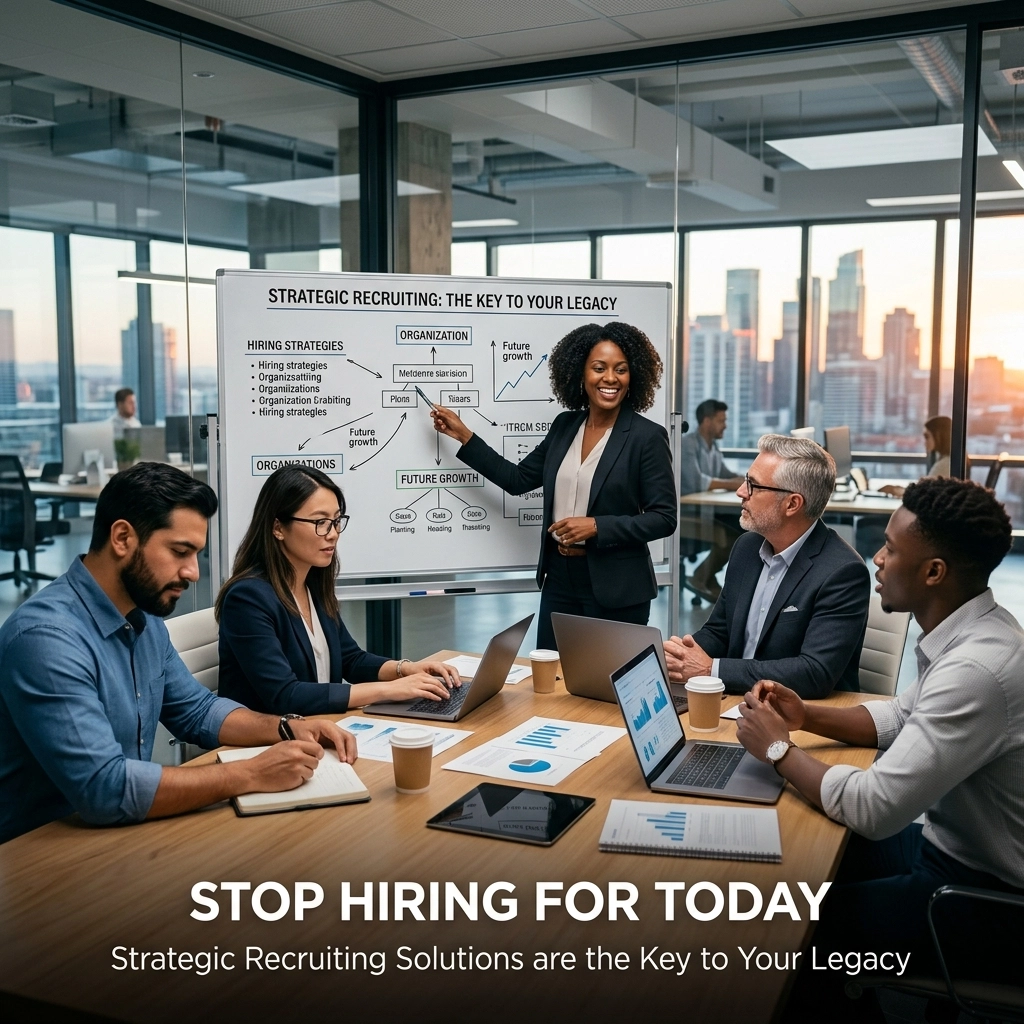
    Diverse professionals implementing strategic recruiting solutions for effective HR staffing for small business.

    Mistake 2: Neglecting Culture Fit for Technical Skills

    We’ve all been there. You find a candidate whose resume is flawless. They have the certifications, the decade of experience, and the technical prowess that should make them a superstar. You hire them on the spot.

    Three months later, your team is miserable. This "superstar" is toxic, doesn't communicate, and refuses to follow your established processes.

    Small businesses often make the mistake of over-indexing on technical skills while completely ignoring improving organizational culture. In a large corporation, one "bad apple" might be buffered by thousands of other employees. In a small business or a specialized healthcare clinic, one person with the wrong attitude can dismantle your entire operation.
    The Fix: Hire for character, train for skill. While technical competency is non-negotiable, it should be the baseline, not the deciding factor. Your hiring process must include a rigorous evaluation of how a candidate aligns with your core values. This is where management coaching and training becomes vital. Leaders need to be trained on how to interview for "soft skills" and cultural alignment.

    When we work with executives, we emphasize that a candidate’s "Social Intelligence" is just as important as their "Technical Intelligence." If they don't fit the culture, they don't get the seat. Period.

    Mistake 3: The "Post and Pray" Method (Lack of System)

    If your recruitment strategy consists of writing a vague job description, posting it on a generic job board, and "hoping" the right person sees it, you are failing your business. In the military, we say "Hope is not a strategy." In the business world, we call this a lack of a Leadership Operating System.

    Most small business job descriptions are outdated or copied and pasted from a competitor. They are boring, they don't sell the vision of the company, and they don't clearly define what success looks like in the role.

    Furthermore, without Strategic Recruiting Solutions, you likely have no way to measure your success. Do you know your "Time-to-Fill" metric? Do you know which sourcing channels provide your highest-retention employees? If you aren't tracking data, you’re just guessing.

    The Fix: Professionalize your process.

    1. Define the Mission: Create a job scorecard that defines the 3–5 key outcomes this person must achieve in their first year.
    2. Market the Role: Treat recruitment like marketing. Why should a high-performer want to work for you?
    3. Use a Structured Interview: Stop relying on "gut feel." Use the same set of questions for every candidate and grade them on a standardized scale to eliminate bias.

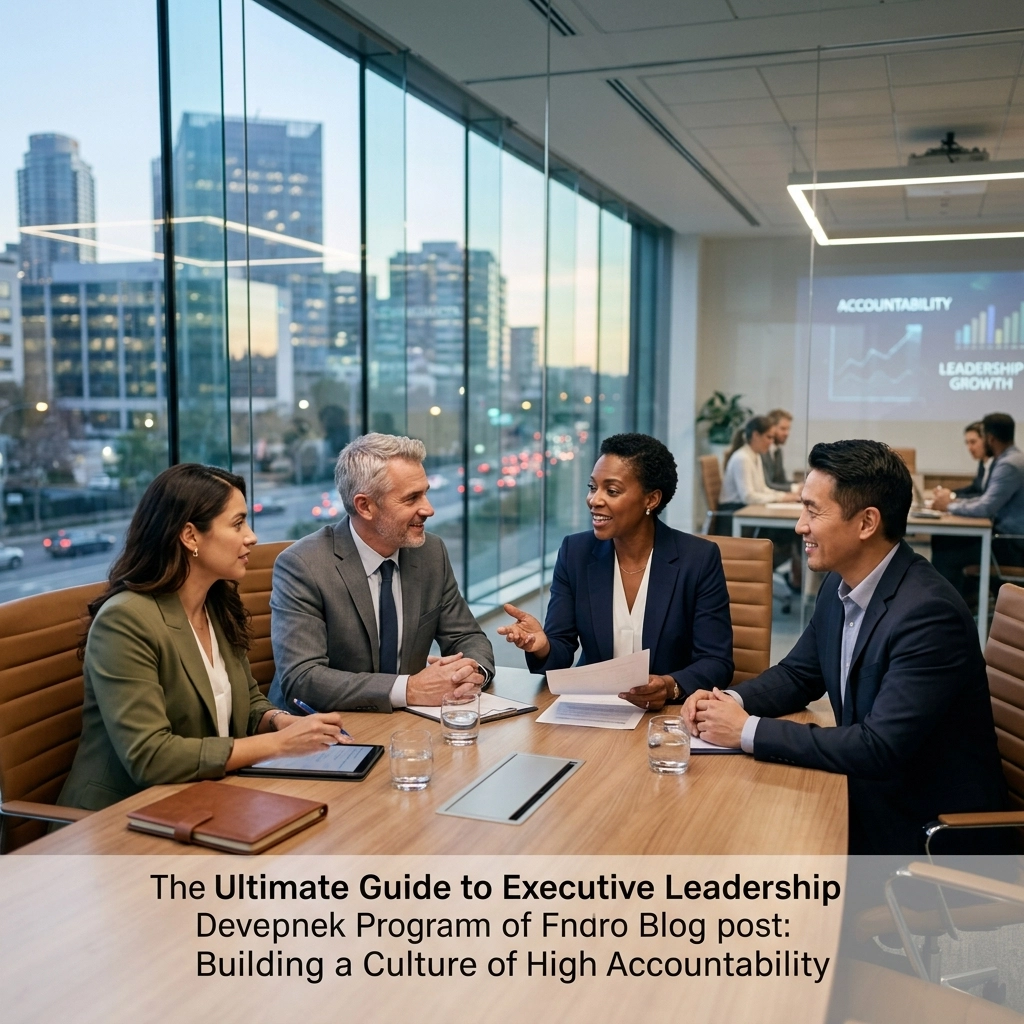
    Leadership team using management coaching and training to foster improving organizational culture and growth.

    The LVSG Solution: The Dual-Service Model

    Most firms offer either coaching or staffing. They’ll either tell you how to lead, or they’ll send you resumes. The problem is that these two things are inextricably linked.

    At Legacy Vanguard Scott Group, we believe that you can't have a high-performing team without high-performing leadership, and you can't lead effectively if you have the wrong people on the bus. This is why our model is different. We combine Executive Leadership Development with a high-intensity Staffing Engine.

    Think of it as a Force Multiplier (Strategic Asset). We don't just find you a candidate; we ensure your internal culture is "hardened" and ready to receive that candidate so they actually stay.

    When you partner with us, we help you:

    • Perform a Strategic Debrief (AAR) of your past hiring failures.
    • Implement a Leadership Operating System that scales.
    • Identify and recruit talent that matches your high standards and mission-driven culture.

    Our veteran-led approach focuses on accountability, discipline, and results. We understand the unique pressures of the healthcare and SMB sectors because we’ve been in the trenches ourselves. We know that "good enough" isn't an option when lives or livelihoods are on the line.

    Stop Guessing. Start Building Your Legacy.

    Filling a seat is easy. Building a legacy is hard. If you are tired of the constant turnover, the frustration of "ghosting" candidates, and the feeling that you’re always one resignation away from a crisis, it’s time to change your approach.

    Your small business deserves a team that is as committed to your mission as you are. By moving away from reactive, unstructured hiring and embracing a disciplined, strategic recruiting model, you aren't just filling a vacancy: you are strengthening your organization’s future.

    Are you ready to stop "praying" for the right candidate and start building a system that attracts them?

    Let’s get to work.

    Who’s ready to harden their culture and build a legacy? 🔥 🌐 https://www.legacyvanguardscott.com/ 🌐

    Take the Next Step:

  • 7 Mistakes You’re Making with Management Coaching (And How a Veteran Approach Fixes Them)

    7 Mistakes You’re Making with Management Coaching (And How a Veteran Approach Fixes Them)

    Let’s be honest: most management coaching feels like a giant group hug that accomplishes absolutely nothing. You sit in a room, talk about "synergy," share some feelings, and then everyone goes back to their desks and makes the exact same mistakes they were making on Monday morning.

    At Legacy Vanguard Scott Group, we call that "administrative drift." In the military, if your training doesn't lead to measurable action, it’s not training: it’s a waste of ammunition. Management coaching and training should be an investment in your company’s "Operating System" (Organizational Infrastructure), not a box to tick for HR.

    If your leadership development feels stagnant, you’re likely falling into the same traps that plague most corporate environments. Here are the seven deadly mistakes you’re making with management coaching, and how we use a veteran-led approach: rooted in 50+ years of Army discipline and high-stakes leadership: to fix them.

    1. Operating Without "Commander’s Intent" (Vague Objectives)

    The biggest mistake in executive coaching for leaders is the lack of a clear "Commander’s Intent" (Strategic Alignment). In the Army, Commander’s Intent is the most important part of an order. It describes what success looks like so that even if the plan falls apart, every soldier knows the ultimate goal.

    Most corporate coaching is vague. "We want to improve leadership" is not a mission; it’s a wish. Without a defined "End State" (Desired Outcome), your coaching sessions lack direction and fail to produce a "Ground Truth" (Objective Reality).

    The Veteran Fix: We start every engagement by defining the mission. Whether you’re in our Ignite, Elevate, or Apex programs, we establish specific, verifiable objectives. We don’t just "coach"; we align your management team’s actions with the CEO’s vision.

    Diverse leadership team achieving strategic alignment through executive coaching for leaders.

    2. Mistaking "Talking" for "Battlefield Circulation" (Communication Breakdown)

    Too many coaches talk at their clients or, worse, spend the whole session listening to the leader vent without providing a way forward. This creates a vacuum of "Ground Truth" (Direct Feedback from the Front Lines).

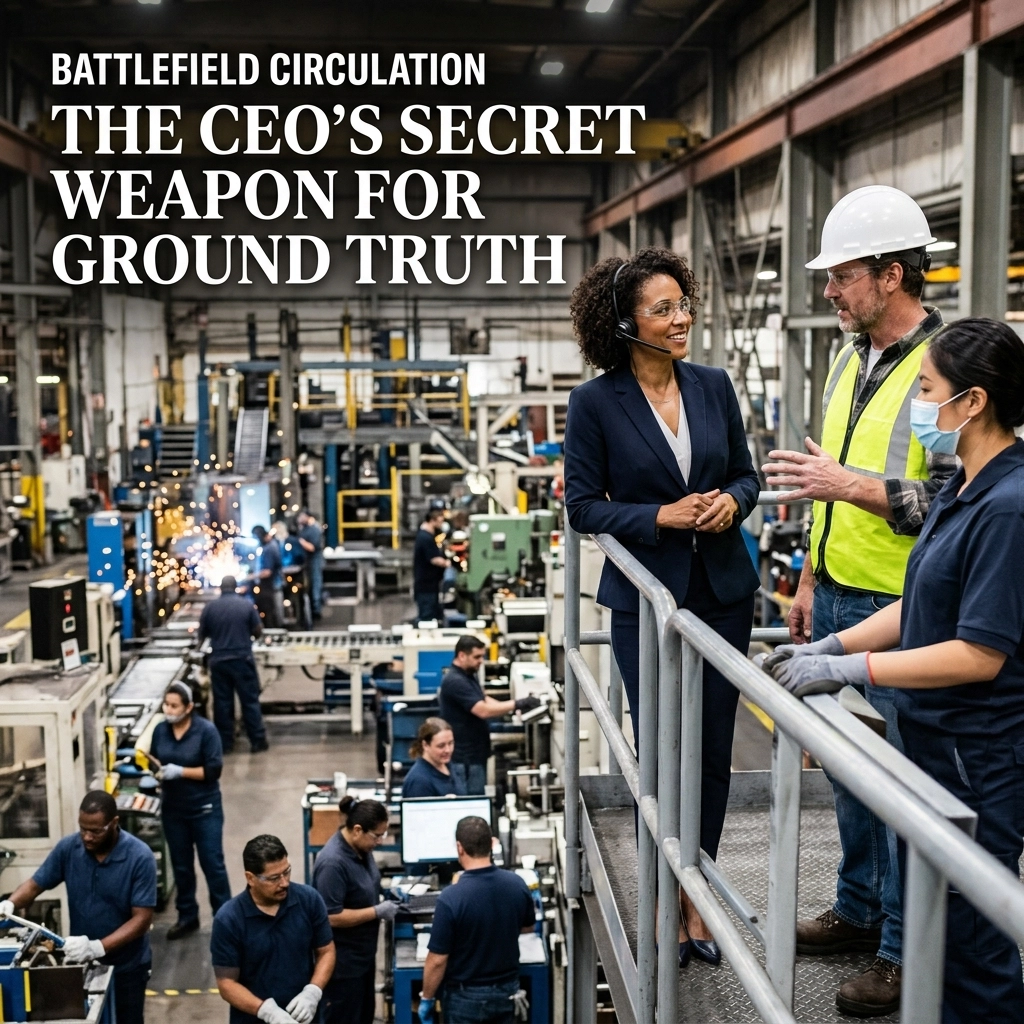
    In the military, we practice "Battlefield Circulation" (Direct Engagement with Team Members). This means getting out of the office and seeing how orders are actually being executed. Coaching fails when it stays in the boardroom and ignores the reality of the "Tactical Level" (Daily Operations).

    The Veteran Fix: Our veteran-led leadership training emphasizes active listening paired with aggressive inquiry. We teach leaders how to conduct their own "Battlefield Circulation" to bridge the gap between executive strategy and employee execution.

    3. Asking Leading Questions instead of Empowering "Mission Command"

    A classic coaching pitfall is the "Hero Complex." Coaches often try to lead the client to a specific answer that the coach has already decided is correct. This undermines the concept of "Mission Command" (Decentralized Execution), where subordinates are empowered to make decisions based on the situation.

    If you’re always giving your managers the answers, they’ll never learn how to think. They’ll just wait for you to tell them what to do: creating a massive bottleneck in your "Decision Rights" (Authority to Act).

    The Veteran Fix: We use the Socratic method of inquiry to build confidence and independence. We want your leaders to be able to function without us: and without you: because that’s how you build a scalable legacy.

    4. Making Assumptions and Ignoring the "Intel"

    Coaches often assume they know the problem because they’ve seen "something like it" before. They ignore the "Intelligence Preparation" (Market and Internal Research) required to understand the unique culture of your organization.

    When you make assumptions, you ignore the "ground truth." You end up solving problems that don't exist while the actual fires continue to burn. This leads to weak execution and a lack of trust between leadership and the workforce.

    The Veteran Fix: At Legacy Vanguard Scott Group, we prioritize "Intelligence Gathering." We look at your "Operating System" (Business Processes) and "Rhythm of Battle" (Operational Rhythm) before we prescribe a solution. We deal in facts, not feelings.

    Executive leader gathering ground truth through veteran-led leadership training and direct engagement.

    5. Methodological Rigidity (The "One-Size-Fits-All" Trap)

    If a coach walks in with a 200-page binder and tells you that every leader must follow the exact same steps, run. Rigid methodologies ignore the "Fluidity of the Battlefield" (Market Volatility).

    Leadership is an art, not just a science. What works for a startup founder won't work for a CEO managing a 500-person manufacturing plant. Forcing leaders into a box limits their ability to practice "Adaptive Leadership" (Agile Problem Solving).

    The Veteran Fix: Our programs: Ignite, Elevate, and Apex: are modular and custom-tailored. We provide the structure of Army values and discipline while remaining flexible enough to adapt to your specific organizational culture.

    6. The "One and Done" Syndrome (No Accountability)

    This is the most common mistake in management coaching and training. A company hires a coach for a weekend retreat, everyone gets excited, and then… nothing happens. There is no follow-up, no "AAR" (Strategic Debrief), and no accountability.

    In the Army, we don't do anything without an AAR (After Action Review). We look at what was supposed to happen, what actually happened, and how we can do better next time. Without a "Strategic Debrief," there is no growth.

    The Veteran Fix: We build accountability into the DNA of our coaching. We don't just provide advice; we implement a "Meeting Cadence" (Scheduled Progress Reviews) that ensures measurable behavior change. We hold your leaders’ feet to the fire until the new standards become "SOP" (Standard Operating Procedure).

    Diverse team conducting a strategic debrief to ensure accountability in management coaching and training.

    7. Coaching Only When the "MOPP Level" is High (Punitive Coaching)

    (Note: MOPP is a military term for protective gear used in toxic environments). If you only offer coaching when a manager is failing, you’ve turned coaching into a punishment. This creates a culture of fear where "coaching" is synonymous with "getting written up."

    Coaching should be about "Hardening the Culture" (Building Resilience) and "Elevating" performance, not just fixing broken pieces. If you only coach during a crisis, you’re always playing defense.

    The Veteran Fix: We promote a "Proactive Posture" (Forward-Thinking Strategy). By integrating coaching into the regular "Rhythm of Battle" (Operational Rhythm), we turn it into a tool for elite performance rather than a corrective measure.

    The Solution: A Veteran-Led Operating System

    Why does a veteran approach work where traditional HR consulting fails? Because we understand that leadership is about more than just "management." It’s about "Commander’s Intent" (Strategic Alignment), "Ground Truth" (Objective Reality), and "Mission Command" (Decentralized Execution).

    At Legacy Vanguard Scott Group, we don’t offer fluff. We offer a "Leadership Operating System" designed to harden your culture and ensure your business survives the "Friction of the Marketplace" (Competitive Pressure).

    Our tiered services are designed to meet you where you are:

    • Ignite: Building the foundation of leadership for new managers.
    • Elevate: Strengthening mid-level leadership and operational rhythm.
    • Apex: High-level executive coaching for leaders who want to secure their legacy.

    Stop making the same seven mistakes. It’s time to move past the "Administrative Drift" and start leading with the discipline and clarity your organization deserves.

    Who’s ready to harden their culture and build a legacy? 🔥 🌐 https://www.legacyvanguardscott.com/ 🌐

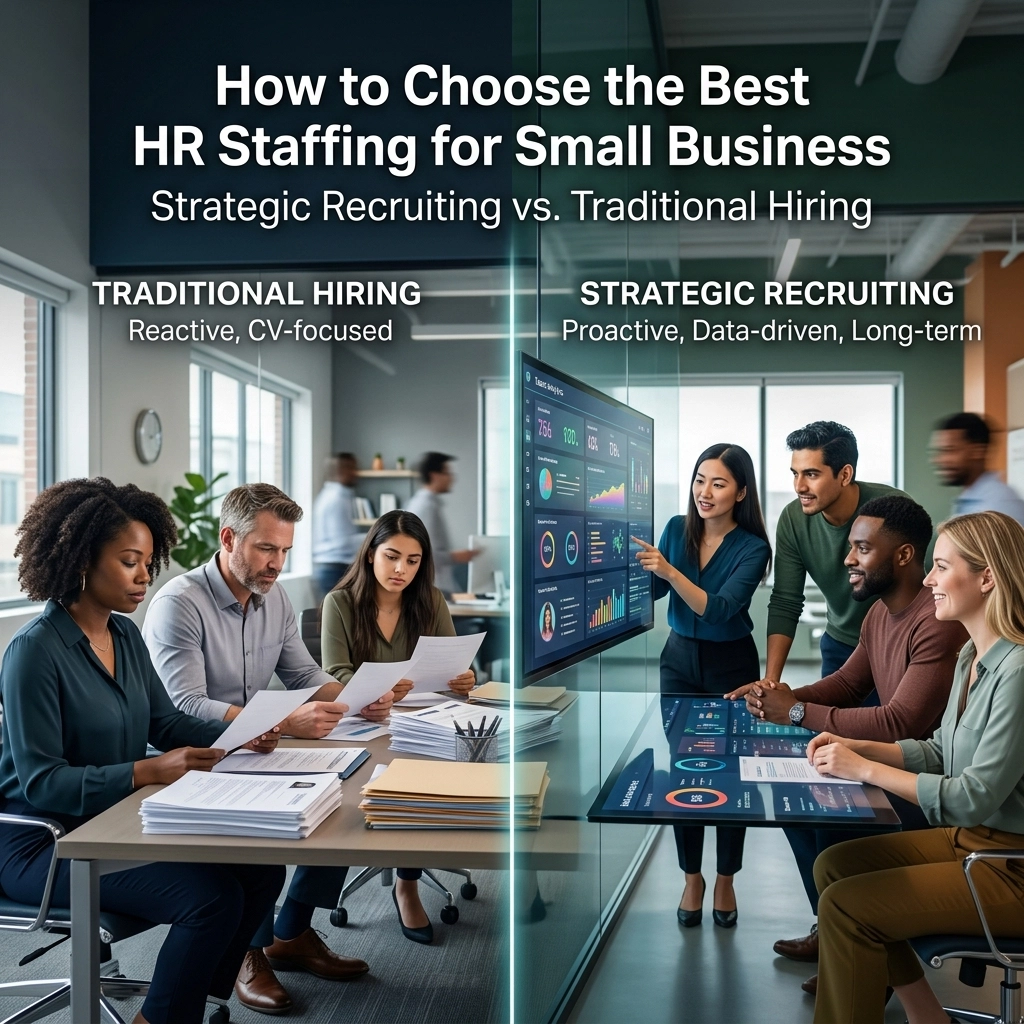
  • How to Choose the Best HR Staffing for Small Business: Strategic Recruiting vs. Traditional Hiring

    How to Choose the Best HR Staffing for Small Business: Strategic Recruiting vs. Traditional Hiring

    In the theater of modern business, small business owners often find themselves fighting a war on two fronts: operational execution and talent acquisition. When the pressure to scale mounts, the instinct is often to "fill the gap" as quickly as possible. However, there is a fundamental difference between simply adding headcount and strategically deploying human capital.

    Choosing the right HR staffing partner is not merely an administrative checkbox: it is a critical decision that determines your organization’s Commander’s Intent (Strategic Alignment) and long-term viability. For small businesses, the choice usually boils down to two distinct philosophies: Traditional Hiring and Strategic Recruiting. Understanding the nuance between these two can be the difference between a high-performing unit and a fractured team.

    The Traditional Hiring Trap: Reactive vs. Proactive

    Traditional hiring is a transactional process. It is reactive by nature: a position opens, a job description is posted, resumes are screened, and a body is placed in a seat. While this may solve a short-term capacity issue, it often fails to account for the Rhythm of Battle (Operational Rhythm) required to sustain growth.

    In a traditional model, the focus is on "filling a slot." The criteria are often limited to technical skills and availability. This "plug-and-play" mentality ignores the deeper complexities of organizational health. When you hire traditionally, you are often looking backward at what was lost, rather than forward at what needs to be built.

    Small business executive using strategic HR planning to manage traditional hiring chaos.

    The Risks of a Transactional Approach

    • Cultural Erosion: Without a focus on culture-aligned values, new hires may disrupt the existing team dynamic, leading to friction and decreased morale.
    • High Turnover: Reactive hiring often results in a "mismatch" of expectations, leading to early exits and the costly need to restart the recruitment cycle.
    • Lack of Scalability: Traditional methods rarely account for future needs, meaning you will likely outgrow your new hires faster than your business can expand.

    Strategic Recruiting: Building the Elite Squad

    Strategic recruiting is an entirely different discipline. It functions as a Force Multiplier (Strategic Catalyst), ensuring that every individual brought into the organization is not only capable of performing their tasks but is also fully aligned with the company’s vision and long-term legacy.

    At Legacy Vanguard Scott Group, we view strategic recruiting as a cornerstone of a healthy Leadership Operating System. It involves a deep dive into the business’s DNA to understand the specific behaviors and mindsets required to drive measurable results.

    The Components of Strategic Recruiting

    1. Alignment with Commander’s Intent (Strategic Alignment): Every hire must understand the ultimate goal of the organization and how their specific role contributes to that victory.
    2. Targeted Position Profiling: Moving beyond generic job descriptions to create detailed profiles that outline expected behaviors, decision rights, and performance metrics.
    3. Cultural Vetting: Utilizing in-depth interview frameworks to ensure candidates possess the discipline and values necessary to "fit the foxhole" (Culture Fit).

    Diverse team recruited through strategic HR staffing to drive small business growth.

    Evaluating Your HR Partner: Key Factors for Small Business Success

    When selecting an HR staffing or consulting firm, you are choosing a partner who will help shape the future of your company. This is not the time for "off-the-shelf" solutions. You need a partner who can provide Battlefield Circulation (Management by Walking Around): someone who gets into the trenches with you to understand your unique challenges.

    1. Industry Intelligence and Specificity

    Generalist HR firms may understand the law, but do they understand your mission? Look for providers who demonstrate high-level industry knowledge. They should speak your language and understand the specific regulatory and competitive landscape of your sector. A partner who understands your industry can offer data-driven recommendations that a generalist simply cannot provide.

    2. Scalability and Custom-Tailored Solutions

    Small businesses are dynamic. Your HR needs today will not be your HR needs six months from now. Avoid firms that lock you into rigid, one-size-fits-all contracts. The best HR partners offer a tiered or modular approach: allowing you to Elevate or Apex your services as your organization matures. Whether you need full-service recruitment or specific Executive Coaching, your partner should scale with you.

    3. Comprehensive Service Scope: Beyond the Resume

    HR is more than just recruiting; it is the management of your organization’s most vital resource. When evaluating partners, look for those who offer a holistic suite of services, including:

    • Onboarding and Integration: Ensuring new hires transition seamlessly into the team.
    • Performance Management: Establishing a clear Meeting Cadence (Operational Rhythm) and accountability structures.
    • Leadership Development: Strengthening the middle management layer to prevent executive burnout.

    Choosing the Right Model: PEO, ASO, or Strategic Consulting?

    For many small businesses, the choice often comes down to the structural model of the HR partnership.

    • Professional Employer Organizations (PEO): These organizations act as a co-employer. They handle payroll, benefits, and compliance. Data shows that small businesses using PEOs grow faster and have significantly lower turnover. This model is excellent for businesses looking to offload administrative burdens entirely.
    • Administrative Services Organizations (ASO): These provide similar services to PEOs but without the co-employment relationship. You retain more control, but you also retain more of the direct liability.
    • Strategic HR Consulting: This is the high-tier approach focused on Recruitment and Placement and leadership architecture. This model is for the leader who wants to harden their culture and build a lasting legacy through elite talent acquisition and management.

    Diverse leaders analyzing strategic recruiting models to improve organizational culture.

    The ROI of Strategic Human Capital Management

    Investing in strategic recruiting and expert HR consulting is not an expense: it is a capital investment in your company’s future. The results are quantifiable:

    • Reduced Attrition: When people are aligned with the mission, they stay.
    • Increased Performance: Strategic hires hit the ground running because they have been vetted for both skill and "will."
    • Enhanced Decision Rights: With the right people in place, leaders can delegate with confidence, knowing that the Commander’s Intent (Strategic Alignment) will be executed without constant oversight.

    By conducting a Strategic Debrief (AAR – After Action Review) of your current hiring practices, you can identify where your "operating system" is failing. Are you hiring for the past, or are you recruiting for the future?

    Final Deployment: Setting the Standard

    In the small business arena, you cannot afford to be mediocre. Your team is your frontline. If you treat HR as a back-office administrative task, your results will reflect that lack of discipline. If you treat it as a strategic priority, you will build an organization that is resilient, scalable, and dominant in its market.

    Stop settling for "good enough" candidates. It is time to ignite your growth by implementing a professional, high-standards recruiting process that reflects the excellence of your brand.

    Confident leadership team built through professional recruitment for long-term business success.

    The mission is clear: harden your culture, empower your leaders, and strengthen your ranks. Whether you are looking for top-tier consulting or need a full capabilities statement to see how we can support your growth, the time to act is now.

    Who’s ready to harden their culture and build a legacy? 🔥 🌐 https://www.legacyvanguardscott.com/ 🌐

  • Hello world!

    Welcome to WordPress. This is your first post. Edit or delete it, then start writing!